


Author: Jeff O'Hara
Why More Houston Homeowners Are Choosing Mini-Split Systems
Inverter-driven mini-split systems are being used to heat and cool entire homes, particularly in areas where traditional HVAC systems struggle to maintain consistent comfort. In a climate like Houston’s — where air conditioners run overtime for much of the year — flexibility and efficiency have made mini-splits increasingly attractive to homeowners seeking smarter long-term HVAC solutions.
But are they actually worth it?
For many homes, the answer is yes. The key is understanding where mini-splits perform best, where they may not, and why they’ve become so popular in places with demanding climates similar to ours.
What Exactly Is a Mini-Split System?
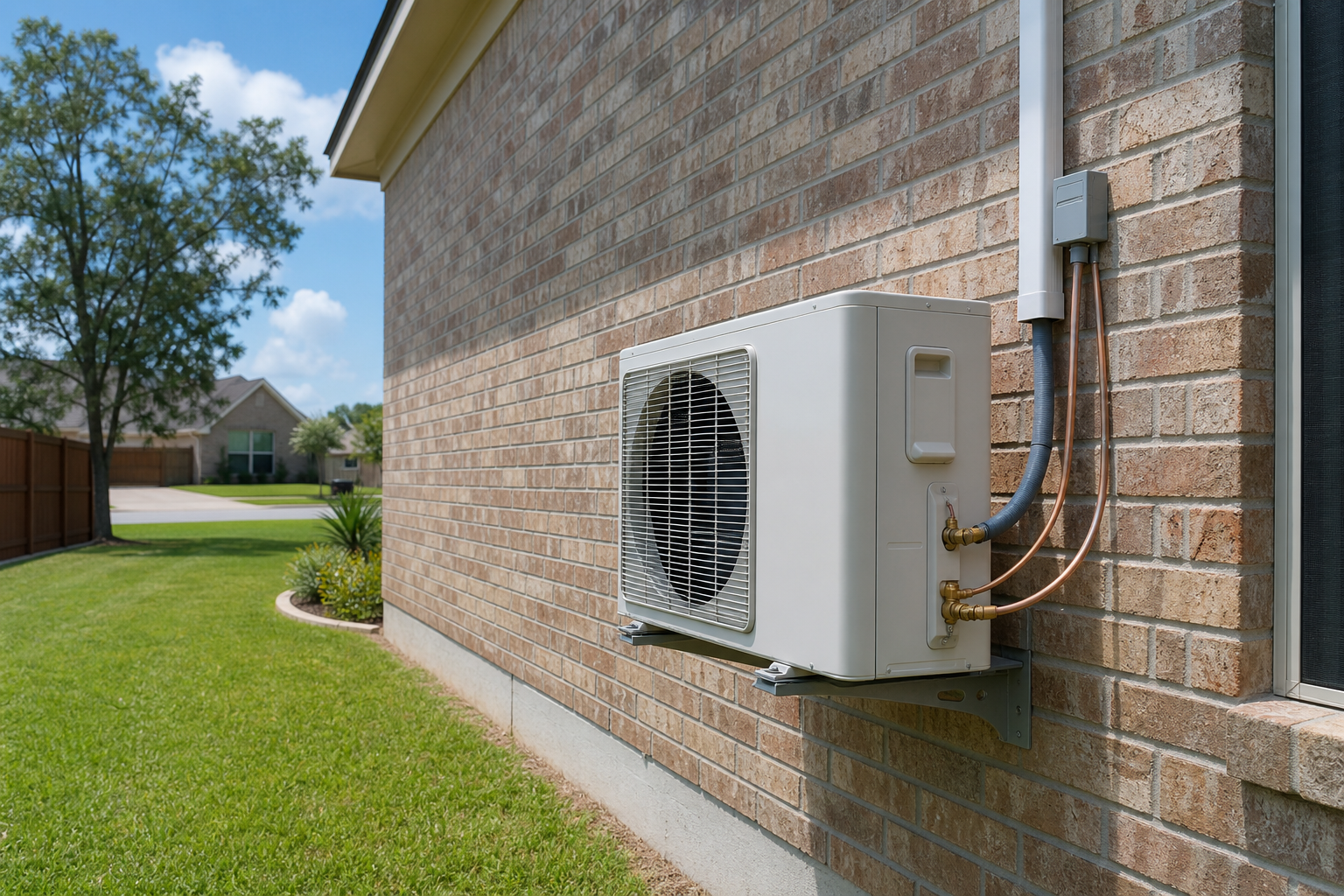
A mini-split is a ductless HVAC system that uses an outdoor condenser connected to one or more indoor air-handling units.
Unlike traditional systems that rely on large ductwork networks to distribute conditioned air throughout the home, mini-splits deliver air directly into individual rooms or zones. That gives homeowners far more control over how different areas of the home are heated and cooled.
This zoning capability is one of the main reasons mini-splits have become more mainstream over the last decade.
Instead of cooling the entire home to satisfy one thermostat, homeowners can control temperatures independently in different rooms. That can be especially useful in larger homes or homes with rooms that are used inconsistently throughout the day.

Why Mini-Splits Have Become More Popular in the U.S.
Although mini-splits still feel relatively “new” to many homeowners in the United States, they’ve been widely used in countries like Japan and throughout Europe for decades.
Part of the reason they gained traction overseas earlier is that many homes there were designed without the extensive ductwork common in American construction. Ductless systems provided a practical, efficient solution without requiring major remodeling.
As inverter technology improved and energy-efficiency standards became stricter, mini-splits gradually became more attractive in the U.S. market as well.
In Houston, that shift has become especially noticeable in neighborhoods like the Houston Heights and Memorial, where older homes, additions, renovations, and converted spaces often create cooling challenges that traditional ducted systems don’t handle particularly well.
Why Mini-Splits Work Well in Houston’s Climate
Houston puts tremendous stress on HVAC systems.
During the long cooling season, extended humidity, and frequent triple-digit heat indexes, traditional systems often run almost continuously for months just to maintain indoor comfort.
Mini-splits handle those conditions differently than conventional HVAC equipment.
Most modern ductless mini-split systems use inverter-driven compressors that adjust output gradually instead of constantly cycling fully on and fully off. That allows the system to maintain a more stable indoor temperature while using less energy during extended operation.
The difference is especially noticeable during Houston’s long stretches of humid weather.
Traditional systems often cool aggressively for short bursts, then shut off completely before cycling back on again. Mini-splits tend to run more steadily, which improves humidity removal and creates a more consistent indoor environment.
For homeowners in areas like Katy and Cypress, where larger homes and rapidly expanding neighborhoods often create uneven cooling issues between floors or zones, that level of control can make a significant difference in day-to-day comfort.
Why Mini-Splits Feel Different Than Traditional HVAC Systems
One thing homeowners often notice after switching to a mini-split system is that the level of comfort feels different.
It’s not that it’s necessarily colder, but when the temperature and humidity remain steady, it gives the homeowner time to think about other things besides the constantly fluctuating temperature in their homes.
Traditional HVAC systems tend to create more temperature swings because of how they cycle on and off. They cool quickly, running at full capacity to reach the thermostat’s set temperature, then shut down completely. Naturally, temperatures and humidity levels drift upward, and the cycle repeats.
Mini-splits operate more gradually.
Instead of blasting cold air for short periods, they maintain more stable temperatures over longer runtimes. That steadier operation also tends to improve humidity control, which matters tremendously in Southeast Texas.
And in Houston, comfort is often tied just as much to reducing humidity as it is to temperature itself.
The Role of Inverter Technology
A huge part of modern mini-split performance comes down to inverter technology.
Traditional HVAC systems operate almost like a basic light switch: fully on or fully off.
Inverter systems behave more like a dimmer switch.
Instead of repeatedly shutting down and restarting, the compressor adjusts continuously based on the home’s cooling or heating demand. That reduces energy waste, lowers component wear, and creates a more stable overall operation.
Daikin mini-split systems are particularly well known for their inverter-driven performance, which is one reason the company has become such a major player in the ductless HVAC market.
For homeowners focused on energy-efficient HVAC solutions in Houston, that technology can offer noticeable long-term advantages in both comfort and operating costs.
Where Mini-Splits Make the Most Sense
Mini-splits aren’t always perfect for cooling and heating an entire home; however, there are certain installations where they perform exceptionally well.
They’re especially effective in:
- Room additions
- Converted garages
- 2nd (and 3rd) floor rooms that always seem too warm
- Older homes without existing ductwork
- Homes with recurring hot and cold spots
- Rooms that need independent temperature control
They’ve also become increasingly popular in renovated homes where extending traditional ductwork would be expensive or impractical.
Common Misconceptions About Mini-Splits
One of the biggest misconceptions about mini-splits is that they’re only useful for small spaces or supplemental cooling.
Modern systems are far more capable than that.
Multi-zone mini-split systems can serve multiple rooms or even entire homes, depending on the layout and design. In many situations, they’re not replacing traditional HVAC systems completely — they’re solving comfort problems that centralized systems struggle to address efficiently.
Another misconception is that mini-splits only provide cooling.
Most modern systems are actually heat pumps capable of both cooling and heating, making them useful year-round in Houston’s relatively mild winter climate.
Are There Any Drawbacks?
Like any HVAC system, mini-splits come with trade-offs.
Initial installation costs can sometimes surprise homeowners, especially when multiple indoor zones are involved. Some people also prefer the hidden appearance of traditional vents compared to visible wall-mounted indoor units.
And perhaps most importantly, system sizing and installation quality matter enormously.
A poorly designed mini-split system can struggle just as much as an improperly designed traditional HVAC system. That’s why proper planning and installation are critical to long-term performance.
FAQ: Mini-Splits in Houston
Are mini-splits good for Houston weather?
Yes. Mini-splits perform particularly well in hot, humid climates because of their inverter-driven efficiency and humidity control capabilities.
Can mini-splits cool an entire house?
They can, depending on the home layout and the number of indoor zones installed.
Do mini-splits provide heat, too?
Most modern mini-split systems are heat pumps that provide both heating and cooling.
Are mini-splits energy efficient?
Yes. Ductless systems often reduce energy loss associated with ductwork and use inverter technology to operate more efficiently.
Are mini-splits worth the investment?
For many homeowners — especially those with zoning issues, additions, or older homes — the comfort and efficiency benefits can make them a worthwhile long-term solution.
Mini-splits are no longer just a specialty product or a temporary trend. For many homeowners in Houston, they’ve become a practical solution for improving comfort, managing energy usage, and solving cooling problems that traditional systems don’t always handle efficiently.
Helping you understand why a certain system will perform better in your home, and what the underlying problems are with regard to cooling (or heating) your home, is what Nick’s has done for almost fifty years.
Thinking About a Mini-Split for Your Houston Home?
Our technicians can assess your current setup and recommend the right ductless solution for your space.
Call Now: (713) 913-3577 Schedule Online
Mini-Split Installation • Ductless Systems • Houston Area