


Author: Jeff O'Hara
The SEER rating in modern HVAC systems is easily one of the most important factors in determining how efficiently your air conditioner operates… or doesn’t. Recent updates to government-mandated standards have made it even more important to understand what these mysterious numbers actually mean.
If you’re researching the purchase of a new HVAC system — or simply trying to make sense of energy efficiency ratings — SEER and SEER2 can be confusing at first. The good news is that once you understand how they work, they become a useful way to compare system performance, especially in a climate like Houston’s.
Let’s start at the beginning.
What Is a SEER Rating?
SEER stands for Seasonal Energy Efficiency Ratio, and it measures how efficiently an air conditioning system operates over an entire cooling season.
It’s calculated by dividing the total cooling output by the total energy used. In simpler terms:
👉 The higher the SEER rating, the less energy your system uses to cool your home.
That efficiency can translate into lower utility bills and more consistent indoor comfort, particularly in areas where air conditioning runs for much of the year.
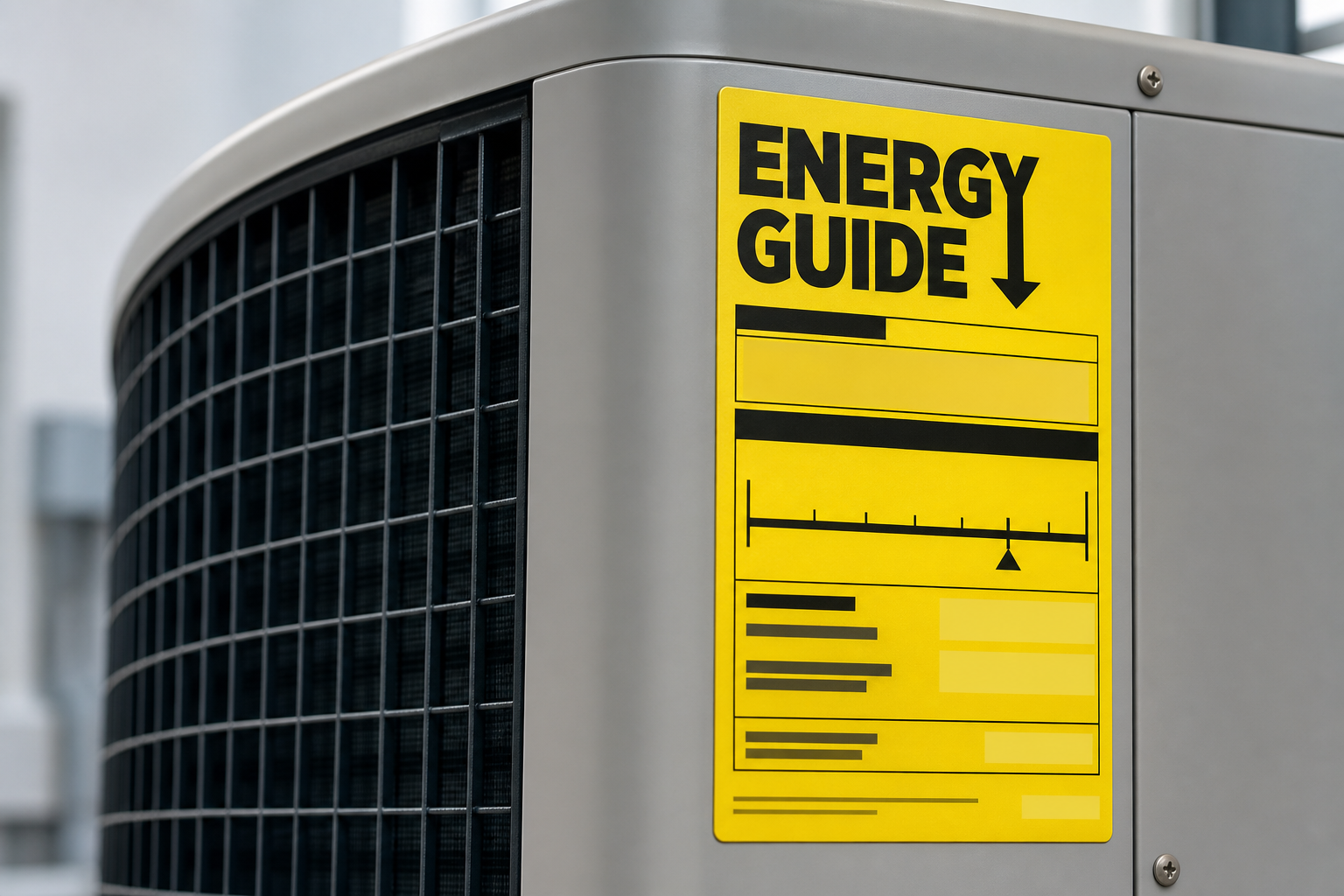
What Is SEER2 — and Why Was It Introduced?
SEER2 is the updated version of the original SEER rating system, designed to better reflect real-world conditions.
The key difference lies in how systems are tested. SEER2 accounts for higher external static pressure — essentially simulating how HVAC systems actually perform once installed in a home, rather than under ideal laboratory conditions.
Because of this change, SEER2 ratings often appear slightly lower than traditional SEER numbers, even though the system itself hasn’t become less efficient. The rating is simply more realistic.
SEER vs SEER2: What’s the Difference?
The difference between SEER and SEER2 comes down to testing standards, not performance capability.
Older SEER ratings were based on ideal conditions that didn’t always reflect real-world airflow and system resistance. SEER2 adjusts for those factors, making it a more accurate representation of how a system will perform in an actual home.
For homeowners, this means newer systems are being evaluated more realistically, allowing for better comparisons between models.
What Is Considered a Good SEER Rating Today?
A “good” SEER rating depends on several factors, including your home, your usage patterns, and your budget.
As a general guideline:
- 14–15 SEER2: Meets minimum efficiency standards
- 16–18 SEER2: Balanced efficiency and cost
- 20+ SEER2: High-efficiency, premium systems
For many homeowners, systems in the 16–18 SEER2 range offer a strong balance between performance and long-term energy savings.
Why Efficiency Matters More in Houston
In Houston, air conditioning systems operate under much heavier demand than in many other parts of the country.
With long cooling seasons, high humidity, and temperatures frequently reaching 90–95°F or higher, your AC system runs for extended periods throughout the year. That increased usage makes efficiency more important.
Even small improvements in energy efficiency can lead to noticeable differences in monthly utility costs over time.
Higher-efficiency systems may also provide:
- more consistent indoor temperatures
- improved humidity control
- quieter operation
How SEER Ratings Affect Energy Use Over Time
While SEER ratings don’t tell the whole story, they do provide a useful way to estimate long-term energy usage.
A higher SEER rating means your system can produce the same amount of cooling while using less electricity. Over time, that reduced energy consumption can offset the initial cost difference between systems — especially in climates where AC usage is high.
However, it’s important to remember that real-world performance also depends on factors like installation quality, ductwork condition, and overall system design.
When SEER Ratings Become More Relevant
You don’t need to think about SEER ratings every day, but they become more important when evaluating system performance over time.
If your system is older or seems to be running longer than usual, understanding its efficiency rating can help explain higher energy bills or reduced performance.
Rather than focusing only on the number itself, it’s more helpful to consider how your system performs in real-world conditions — especially in a climate like Houston’s, where demand is consistently high.
FAQ: SEER and SEER2
What is a SEER rating in HVAC?
It’s a measurement of how efficiently your air conditioner operates over an entire cooling season.
What is SEER2?
SEER2 is an updated efficiency rating system that reflects real-world operating conditions more accurately than older SEER standards.
What is a good SEER rating?
Most homeowners benefit from systems in the 16–18 SEER2 range, which balance efficiency and cost.
Does SEER2 replace SEER completely?
Yes, SEER2 is now the standard used for evaluating new HVAC systems under updated federal guidelines.
Does SEER matter in Houston?
Yes. Because of the long cooling season and high temperatures, efficiency plays a major role in both comfort and energy costs.
Final Thoughts
SEER and SEER2 ratings are useful tools for comparing HVAC systems, but they’re only one part of the bigger picture.
Understanding how efficiency, climate, and system performance work together can help you make more informed decisions — whether you’re maintaining your current system or simply learning how your HVAC system operates in Houston’s demanding conditions.
Questions About SEER2 or Upgrading Your HVAC System?
Our technicians can help you compare efficiency ratings and find the right system for your home, your budget, and Houston’s climate.
Call Now: (713) 913-3577 Schedule Online
High-Efficiency HVAC • System Upgrades • Houston Area