

Author: Jeff O'Hara
Picture today as just another typical sweltering July or August day in the Houston Heights, and as usual, your air conditioner is having a difficult time getting your home cooled to the desired temperature.
At the same time, the humidity in the house is becoming unbearable.
Your thermostat is set to 70°, but the indoor temperature is 78°.
The outdoor temperature is 99°, and the humidity is creating a feels like temperature of 110°.
So you do what every normal homeowner would do. You crank the thermostat down a couple of degrees.
Twenty minutes later, nothing has changed.
So you lower it again.
Now you’re standing in your living room staring at a little plastic box on the wall, wondering if your air conditioner has officially decided to retire.
People Tend to Assume the Worst When it Comes to HVAC Repair.
So, before you blame the outdoor unit, the compressor, the refrigerant, or your mother-in-law, there’s one piece of equipment that’s often overlooked.
Your thermostat. The literal brain of your HVAC system.
Too many homeowners think of their thermostat as nothing more than a temperature display with a few buttons. When installing a new HVAC system, or upgrading your thermostat to a newer “smart thermostat“, you need to think of that thermostat as the command center for your entire HVAC system.
If it’s reading the wrong temperature, installed in the wrong location, or beginning to fail, it can make a previously healthy air conditioner behave like it’s on its last legs.
Your Thermostat Does More Than Turn the AC On and Off
Most people think a thermostat has one job, tell the air conditioner when to start cooling or the furnace when to start warming up the house.
It actually has another job that’s just as important.
It tells the system when to stop.
Every few seconds, your thermostat is checking the temperature around it and making decisions based on that information. If the temperature is above your setting, it tells the AC to keep running. If the temperature reaches the target, it tells the system to shut off.
Simple. Unless the information it’s receiving isn’t accurate.
Here’s something that surprises a lot of homeowners.
Your Thermostat Only Knows the Temperature and Humidity Level of Where it’s Mounted.
That’s it. It has no idea your upstairs bedroom feels like a greenhouse.
It doesn’t know the game room over the garage is ten degrees warmer than the living room.
It certainly doesn’t know the afternoon sun has been pouring through your west-facing windows for the last three hours.
It’s making decisions based on the temperature in one very small part of your house.
If that location doesn’t accurately represent the rest of your home, your HVAC system may spend the entire day chasing the wrong target.
Five Ways Your Thermostat Can Make Your AC Work Harder Than It Should
1. It’s Mounted in Direct Sunlight
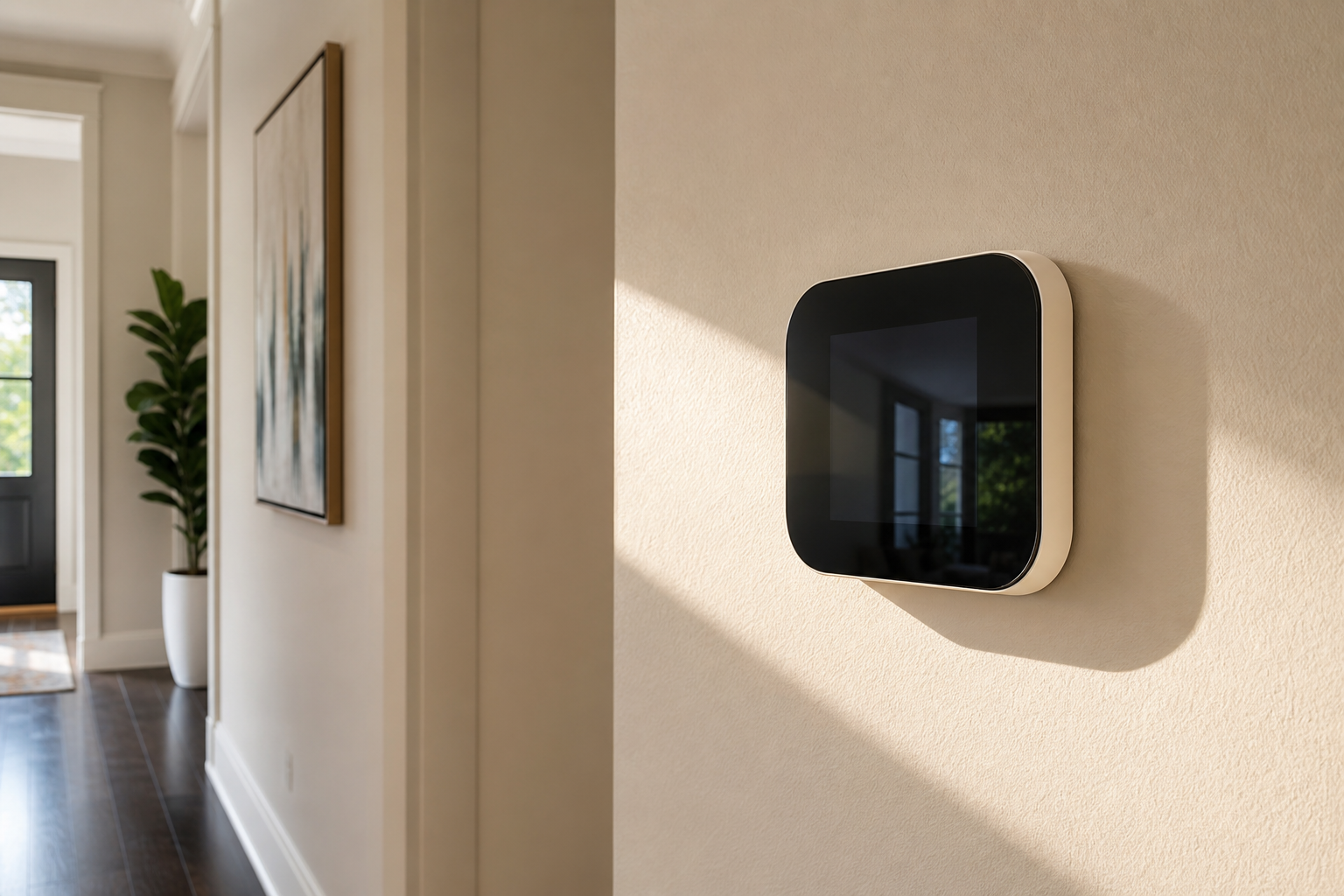
Houston sunshine has a way of finding every west-facing wall in the afternoon. If your thermostat is absorbing that heat, it may think your home is much warmer than it really is. The result?
The air conditioner keeps running long after the rest of the house is already comfortable.
2. It’s Too Close to the Kitchen
Ever notice how much warmer the house feels while dinner is cooking? Your thermostat notices too.
Heat from the oven, stovetop, or even nearby appliances can fool it into thinking the entire house needs more cooling when the temperature spike is really limited to one area.
3. The Batteries Are Dying
Not every thermostat is hardwired. Weak batteries can cause erratic readings, delayed responses, or a blank screen altogether.
It’s one of the simplest things to check—and one of the easiest to overlook.
4. It’s Simply Getting Older
Like any electronic device, thermostats wear out over time.
Sensors lose accuracy. Internal components age. Buttons become less responsive.
You may not notice the change from one day to the next, but after several years, those small inaccuracies can add up to noticeable comfort problems.
5. It’s Installed in the Wrong Location
This is more common than many homeowners realize.
A thermostat mounted near an air supply vent, hallway, exterior door, or sunny window may never provide an accurate reading of the home’s average temperature.
As a result, the HVAC system is constantly reacting to conditions that don’t reflect what the rest of the family is actually experiencing.
Myth vs. Reality: Thermostat Edition
Myth: “If I set the thermostat to 65°, my house will cool faster.”
Reality: Air conditioners don’t have a “turbo” button.
Whether you set the thermostat to 72° or 65°, the system cools your home at essentially the same rate. The only difference is how long it continues to run. Cranking the temperature down doesn’t produce colder air—it simply tells the system not to shut off until it reaches that lower setting. On a brutally hot Houston afternoon, that may mean the air conditioner runs almost continuously without making the house feel noticeably cooler.
Myth: “My thermostat says 72°, so the whole house must be 72°.”
Reality: Your thermostat only measures one location.
Upstairs bedrooms, attics, bonus rooms over the garage, sunrooms, and west-facing rooms often experience very different temperatures than the hallway where the thermostat happens to be mounted. Your thermostat isn’t lying—it just doesn’t know what’s happening everywhere else.
Why Smart Thermostats Are Becoming So Popular
One of the biggest advantages of today’s smart thermostats isn’t convenience.
It’s awareness.
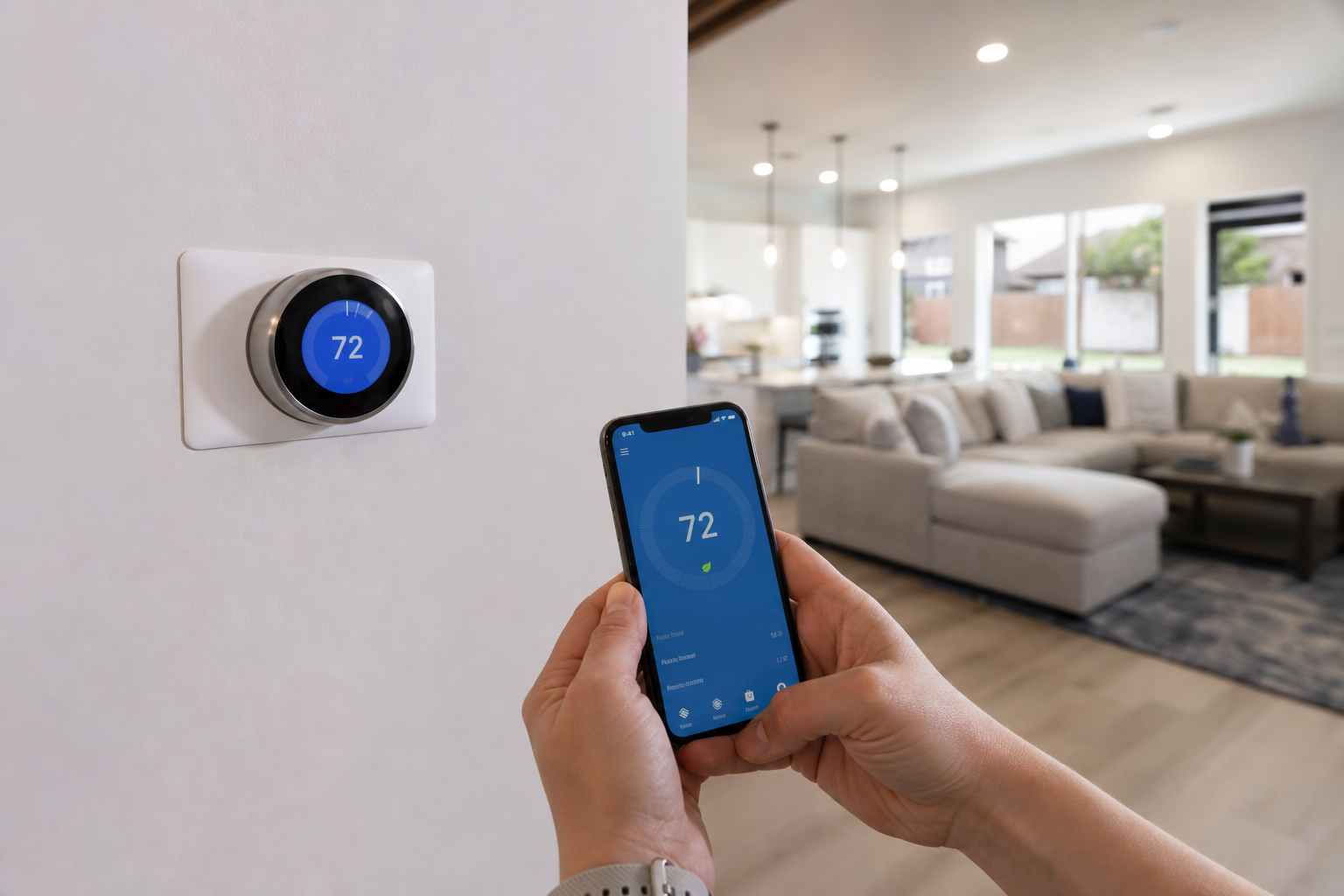
Many modern thermostats can alert homeowners when unusual runtime patterns develop, remind you to change filters, track energy usage, and allow temperature adjustments even when you’re away from home.
Some models can even learn your schedule and make small adjustments that improve comfort while reducing unnecessary runtime.
For many Houston homeowners, they’re no longer just programmable thermostats.
They’re another tool for helping identify small problems before they become expensive ones.
Houston Reality
Living on the Gulf Coast means your HVAC system works harder than it would in many other parts of the country.
Between long cooling seasons, relentless humidity, and afternoon temperatures that regularly climb into the upper 90s, your thermostat is making thousands of decisions every day under conditions that push residential air conditioning systems to their limits.
That’s why something as simple as poor thermostat placement—or a sensor that’s drifting just a few degrees off—can have a much bigger impact here than it might in a milder climate.
A thermostat that’s only slightly inaccurate in Chicago might barely be noticeable.
In Houston?
It could translate into hours of unnecessary runtime every week.
Sometimes the Smallest Problems Create the Biggest Utility Bills
Most homeowners don’t wake up one morning to discover their thermostat has failed.
Instead, the symptoms creep in gradually.
The house starts feeling a little less comfortable.
The air conditioner seems to run a little longer.
The electric bill inches upward.
One room never seems to cool quite like it used to.
None of those issues seem serious by themselves.
Together, however, they’re often your home’s way of telling you something isn’t quite right.
Catching those warning signs early is almost always easier—and less expensive—than waiting until a small thermostat issue turns into months of wasted energy or unnecessary wear on your air conditioner.
Frequently Asked Questions
How do I know if my thermostat is bad or my air conditioner is broken?
A faulty thermostat often causes inconsistent temperatures, unusual cycling, or incorrect temperature readings. However, many air conditioning problems create similar symptoms. A professional inspection can quickly determine whether the thermostat, the HVAC system, or another component is responsible.
Can a thermostat really increase my electric bill?
Yes. If the thermostat is reading temperatures incorrectly or causing the system to run longer than necessary, your air conditioner may use significantly more electricity than it should.
Where is the best place to install a thermostat?
Ideally, thermostats should be mounted on an interior wall away from direct sunlight, supply vents, exterior doors, kitchens, and other heat sources that can affect temperature readings.
How long do thermostats usually last?
Most quality thermostats last around 10 to 15 years. If yours is older, becoming inaccurate, or no longer responding consistently, replacement may be worth considering.
Is a smart thermostat worth it?
For many Houston homeowners, yes. Smart thermostats can improve comfort, provide better scheduling, monitor system performance, and help reduce unnecessary energy use when properly installed and programmed.
Your Air Conditioner Can Only Be As Smart As the Information It Receives
When your home isn’t staying comfortable, it’s easy to assume the air conditioner is failing.
Sometimes that’s true.
Sometimes it’s simply following instructions from a thermostat that’s no longer providing accurate information.
If your system has been running longer than it should, temperatures never seem quite right, or your thermostat appears to have a mind of its own, let Nick’s Plumbing & Air Conditioning take a look. We provide free estimates, every qualifying repair is backed by our 90-day workmanship warranty, and our experienced technicians can quickly determine whether the issue is your thermostat, your air conditioner, or something else entirely.
Call (713) 913-3577 today to schedule your appointment. And if you’re a member of the Nick’s Smart VIP Monitoring & Maintenance Program, remember that your routine maintenance visits often catch problems like these long before they affect your comfort—or your electric bill.
Is Your Thermostat Working Against Your AC?
Free estimate, no service fee to come out. We’ll tell you whether the issue is the thermostat, the air conditioner, or something else entirely.
Call Now: (713) 913-3577 Schedule Online
Thermostat Diagnosis • AC Repair • Smart VIP Maintenance