

Author: Jeff O'Hara
Most AC systems are designed around a temperature differential.
A properly functioning, well-maintained air conditioner can generally keep indoor temperatures approximately 15–20 degrees cooler than the outdoor air temperature when operating at maximum capacity.
That’s where homeowners get confused.
When it’s 95°F outside, keeping your home at 75°F is probably achievable.
When it’s 105°F outside, 72°F is probably not on the menu.
Now, remember: if your house is just warmer than you’d like, you definitely don’t want your favorite Nick’s AC tech to tell you the system is functioning exactly as it should. Even though it is struggling to reach the desired temperature or to reduce the humidity level — and not always succeeding — everything is perfectly normal as far as the AC components are concerned.
So, every summer, hundreds of thousands of Houston homeowners witness the same argument between their thermostat and the actual room temperature:
Thermostat says: 72.
Room says: 78.
Room wins.
And this is where you realize you’ve already lost the battle.
The air conditioner has been running for three straight hours, you’ve sweated your way through two T-shirts, and you’re starting to suspect the thermostat is just screwing with you to watch your reaction.
This insanity has to stop. The battle may be lost, but now it’s time to win the war!
Now, this is going to sound a little strange coming from a company that earns its living by selling new air conditioners, but here’s a little secret.
The problem isn’t always that your air conditioner is broken.
Sometimes it’s simply losing a battle against weather conditions it was never designed to conquer. Understanding the difference can help you avoid unnecessary repairs, improve comfort, and recognize when a real HVAC problem actually exists.
Your AC Was Never Designed to Beat Southeast Texas Heat!
Air conditioners are designed using engineering calculations that assume certain outdoor temperatures and home conditions. Those calculations work well most of the time.
The problem is that Texas weather is always going to be Texas weather, and it has no interest in what your fancy calculations say; it is not here to cooperate.
So, thanks to that, during periods of extreme heat, outdoor temperatures will climb well past the limitations built into almost every AC system. And let’s not forget to pay tribute to Houston’s notorious humidity, so thick you can taste it, that your air conditioner now finds itself having to cool and dehumidify your home simultaneously.
Heat Is Only Half the Problem
Most homeowners focus on temperature.
HVAC professionals worry just as much about humidity.
Every air conditioner has two jobs:
- Lower the indoor temperature.
- Remove excess moisture from the air.
In Houston, that second job is often more difficult than the first.
When humidity is high, your air conditioner requires large amounts of electricity to remove moisture before you ever feel the cooling effect. That’s one reason two homes set to the same thermostat temperature can feel completely different, and have widely different energy bills.
A properly conditioned 75-degree home feels comfortable.
A humid 75-degree home feels sticky and uncomfortable.
And unfortunately, your air conditioner has to work to correct both problems at once.
Your Attic May Also Be Conspiring Against You!
One of the biggest contributors to summer cooling problems is something most homeowners only think about when it’s time to break out the holiday decorations.
The attic.
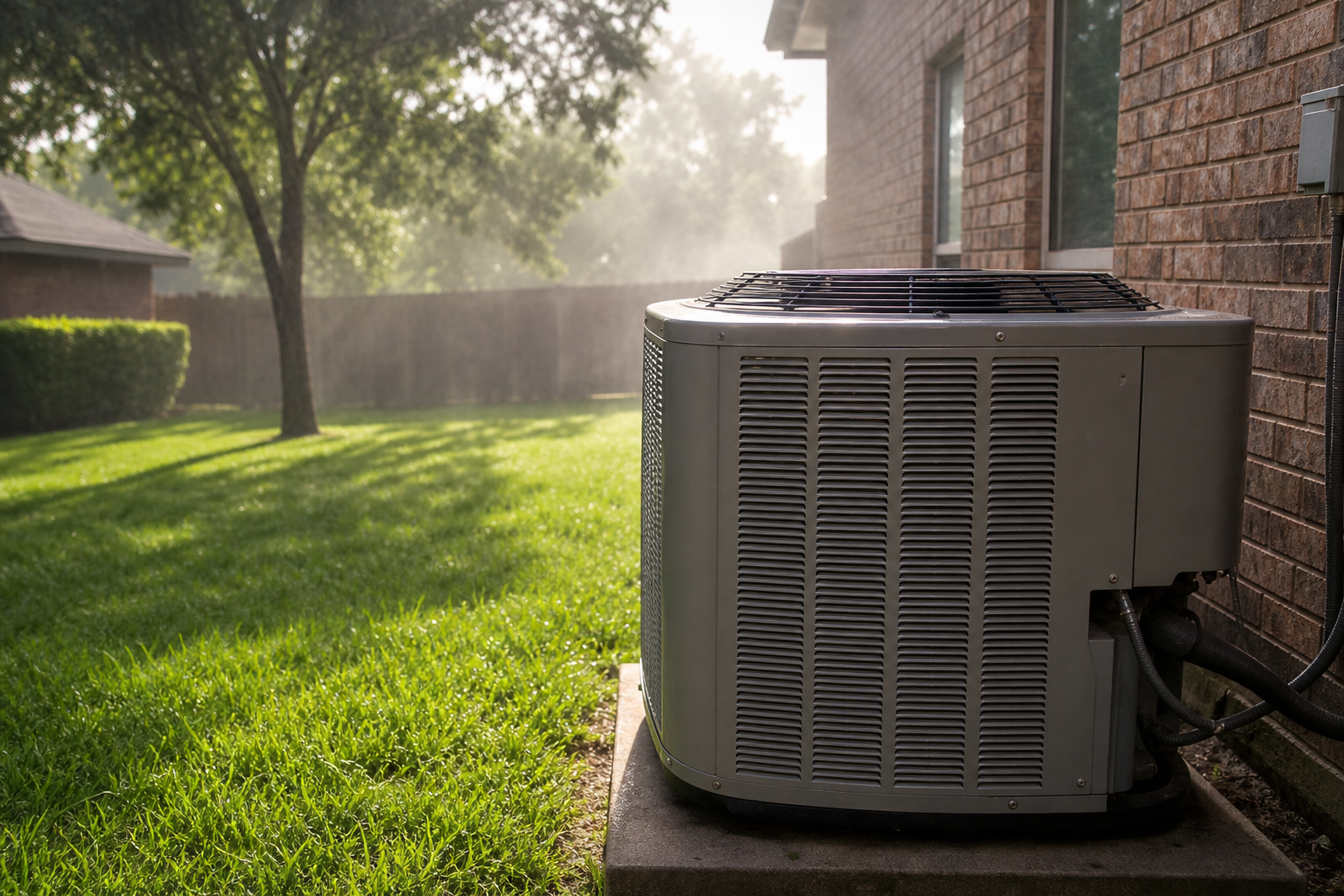
During the peak of summer, attic temperatures can easily exceed 130°F.
That heat flows downward into the living space while also warming any ductwork running through the attic. As conditioned air travels through hot ducts, a good chunk of that cooling is lost before it ever reaches the vents.
Older homes in areas like Independence Heights and Acres Homes, built long before air conditioning was a thing, face this challenge every summer. Older homes throughout Houston rarely have adequate insulation and were built in an era when houses were designed for maximum airflow.
Dirty Filters Can Restrict Airflow
Once in a great while, the universe works in our favor. When the explanation for your AC woes is a simple $20 square of fiberglass, it is far less expensive and carries far less financial drama than a major HVAC repair.
Thankfully, changing an air filter in your HVAC is so easy that anyone can do it. And whoever that “anyone” is in your house, they should keep repeating this task every three months.
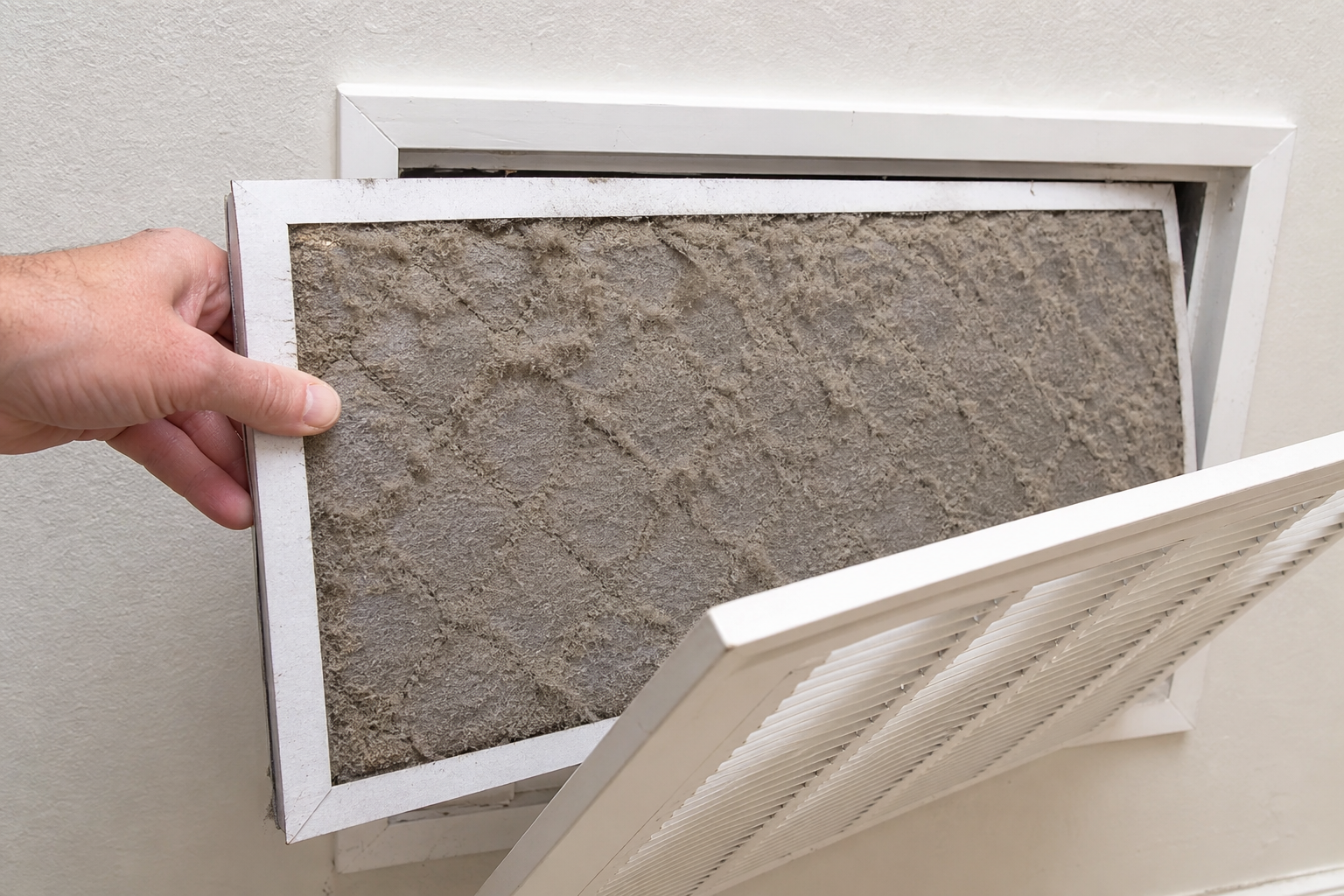
Your AC filter doesn’t have to be filthy to the naked eye to cause low airflow issues. Less air being drawn into the unit means less conditioned air reaches your living spaces. The system now has to run longer to achieve the same results, placing additional strain on components while increasing energy consumption.
Regular filter changes remain one of the simplest and most effective ways to help an HVAC system perform efficiently during extreme weather.
Refrigerant Problems Can Reduce Cooling Capacity
If your system struggles to maintain the desired temperature despite running almost constantly, low refrigerant levels may be part of the problem.
Refrigerant doesn’t get “consumed” like gasoline in a vehicle.
If levels are low, there is a 99.9% chance of a leak present somewhere in the system.
As refrigerant escapes into the atmosphere and levels drop, the air conditioner loses its cooling capacity and often runs longer to compensate. Homeowners may start to notice warmer supply air from the vents, longer AC cycle runtimes, steadily rising indoor temperatures, or higher energy bills with no obvious explanation.
This is one issue that requires professional diagnosis and repair.
Aging Equipment Faces an Uphill Battle
Even well-maintained systems eventually show their age.
As components wear out, efficiency decreases, and performance gradually declines. A system that handled Houston summers with ease ten years ago may now struggle during the season’s hottest periods.
This doesn’t automatically mean that a complete HVAC system replacement is necessary.
But it does mean the margin for error becomes much smaller.
Minor issues that would have gone unnoticed in a newer system often become much more apparent in older equipment.
What Are Inverter Systems and Do They Perform Differently?
Inverter-driven systems have been a complete game-changer in the HVAC field.
Standard, single-speed air conditioners operate like a light switch — either fully on or fully off.
Modern inverter systems continuously adjust output based on demand. Instead of repeatedly cycling on and off throughout the day, they modulate performance to match conditions inside and outside the home. They act more like a dimmer switch, allowing you to control your home’s comfort more precisely.
Daikin systems are particularly well known for inverter-driven HVAC technology.
During long Houston heat waves, inverter-driven systems can maintain more consistent indoor temperatures while operating more efficiently than traditional single-stage equipment.
They’re not magic. They still have limits. But they’re far better equipped to handle prolonged periods of extreme heat.
How Does VIP Maintenance Help Homeowners Stay Ahead of HVAC Issues?
One of the biggest frustrations homeowners face is not knowing whether their system is operating normally or is developing a problem. Nick’s VIP Maintenance Plan tracks system performance and can alert homeowners to developing issues before they become major breakdowns.
The VIP Plan isn’t just for your furnace and air conditioner; it provides plenty of plumbing-related incentives as well. Click the link above to our VIP Maintenance Plan page and see all of the benefits this unique plan has to offer.
This way, instead of waiting for your AC compressor to fail in the middle of July, potential concerns can often be identified before repairs become more costly.
That’s not just convenient.
It’s also — usually — far less expensive.
When Should You Be Concerned?
A system that runs for longer cycles during a Houston heat wave isn’t necessarily failing, but there are several warning signs homeowners should watch for.
If your air conditioner is:
- unable to maintain temperature during normal weather
- producing weak airflow
- creating unusual noises
- causing dramatic increases in energy bills
- cycling constantly without improving comfort
It may be time to schedule a professional inspection.
The goal isn’t simply to survive the summer. The goal is to ensure your system operates as efficiently and reliably as possible.
FAQ: AC Performance in Texas Heat
Why won’t my AC reach the temperature I set?
Extreme outdoor temperatures, humidity, airflow restrictions, or system issues can all affect cooling performance.
Is it normal for my AC to run all day in Texas?
During periods of extreme heat, longer runtimes can be normal. However, continuous operation without adequate cooling may indicate a problem.
Can humidity make my house feel hotter?
Yes. High indoor humidity levels make it harder for the body to cool itself, creating a warmer and less comfortable environment.
How often should I change my air filter?
Most homeowners should check filters monthly and replace them according to manufacturer recommendations.
Do inverter air conditioners work better in Houston?
Inverter systems often perform very well in Houston because they can continuously adjust output to match changing cooling demands.
One Last Thing Before We Go!
Houston summers have always been demanding, and unfortunately, it doesn’t look like they are getting any cooler. It definitely feels hotter here than it did ten or fifteen years ago.
If your air conditioner seems to be struggling, the first step is to determine whether it’s coping with normal Texas heat or signaling a developing problem.
A professional inspection, regular maintenance, and modern monitoring technology can help you separate the two — and keep your family comfortable no matter whatever the weather decides to do.
Is Your AC Struggling to Keep Up in the Texas Heat?
Our technicians can tell you whether your system is coping with extreme weather or signaling a real problem — and what to do next.
Call Now: (713) 913-3577 Schedule Online
AC Repair • Maintenance • Houston Area