

Author: Jeff O'Hara
Most plumbing emergencies don’t begin as emergencies. They begin as annoyances.
- A toilet that runs a little longer than it should.
- A drain that’s a little slower than it used to be.
- A small puddle under the water heater that only appears occasionally.
Of course, the biggest problem affecting you is that plumbing systems don’t tend to repair themselves. In fact, given enough time, they’ll usually do the exact opposite.
So, what starts as a minor annoyance today can become a flooded bathroom, a collapsed sewer line, or a major water leak tomorrow.
OK, maybe not literally tomorrow, but it’s important to help the homeowner understand the urgency and WHY it’s so important to perform a professional maintenance and inspection service. The inspection phase of the work can give the experienced plumbing tech an idea of the real issue based on their observations.
A proper inspection, especially one that includes a high-definition snake camera’s view from inside the pipe walls, can literally provide deeper insight as to what is causing your particular plumbing issue.
The good news is that most plumbing emergencies provide warning signs long before disaster strikes. The challenge is recognizing those signs and addressing them before they lead to an expensive repair or replacement.
With all that said, here are the finalists for the “Top 5 Most Ignored Signs of Impending Plumbing Doom”.
#5: Slow Drains Throughout the House
A slow drain rarely feels urgent.
After all, the water eventually goes down.
Does it?
OK, most of the time. But as long as the sink empties, everything is good, right?
I mean, it’s good that the sink eventually empties, but one of these days, it’s not going to empty anymore. Slow drains are often one of the earliest signs of an imminent plumbing emergency. It may not happen today, but it’s coming.
Kitchen grease, soap residue, mineral buildup, tree roots, and deteriorating sewer lines can all restrict the flow of the drain over time. What begins as a mildly annoying, slow-draining sink today will, without intervention, become a complete blockage or sewer backup.
An even brighter warning light should start flashing in your brain when you realize multiple drains throughout the home are all “slow draining” at the same time. Think of your single slow drain as your plumbing system’s way of asking for your help.
Before it has to demand it.
#4: The Small Leak Under the Sink
Every plumber has seen this story play out countless times.
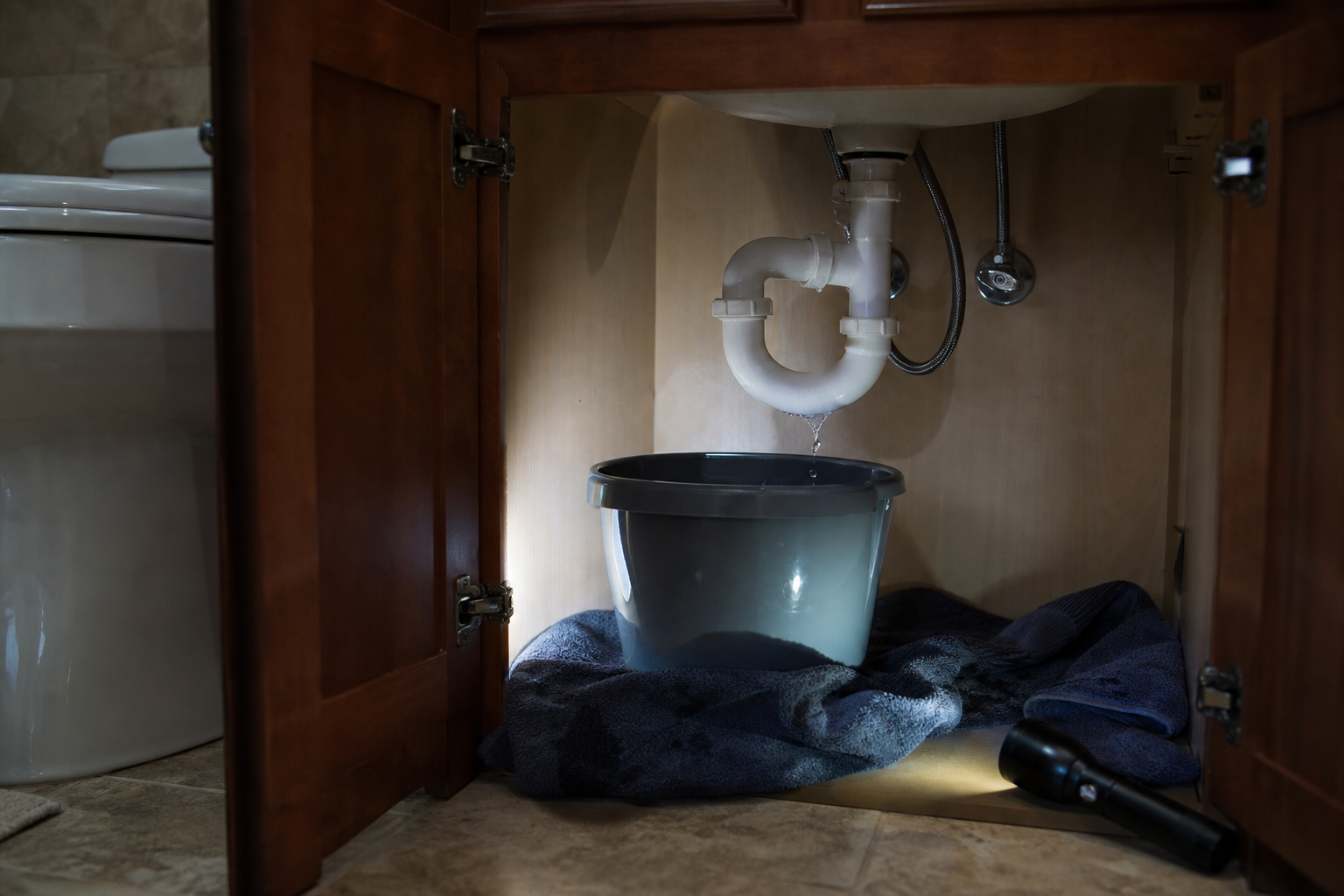
The homeowner notices a few drops of water beneath a bathroom sink. They look “everywhere” for the source of water, but despite flashlights, reading glasses, and at least one bump on someone’s head, they can’t seem to locate the leak.
So, they take a folded-up bath towel and lay it underneath the pipes, but when they check after 2 days, it is completely soaked. This time, they’ll try a small bucket underneath it and check it every few hours. For now, the leak seems manageable. Maybe you have to graduate to a bigger bucket, but you’re just hoping to get through the summer before needing major plumbing surgery.
Eventually, that pipe is going to overwhelm the capacity of your little 3-gallon plastic safety net, and when that cup runneth over, and the cabinet floor begins to swell, mold starts developing, and what would have been a simple p-trap cleanout or supply pipe repair becomes a full-on unplanned kitchen renovation.
Remember, small leaks rarely stay small.
Houston’s summer heat can accelerate water damage and make existing plumbing leaks even more expensive to ignore.
#3: Water Heater “Sweating” and/or Leaking
Water heaters have a habit of sending some not-so-subtle warning signs before they decide to pack it in and create a truly catastrophic failure.
The trouble is that many homeowners don’t know what those signs are, primarily because many people were never taught about plumbing fixtures or what they’re looking at when standing in front of a water heater, supposedly diagnosing it. And they aren’t supposed to know this stuff.
That which is an “everyday” experience for plumbers, the homeowner may experience only once: the pride and joy of diagnosing a plumbing issue. That said, most people are more likely to ignore the excessive condensation dribbling down the outside of their water heater tank, even as it leaves a small puddle at their feet.
Now, a small amount of condensation may be normal under extremely hot or humid conditions. A small puddle that keeps reappearing, however, deserves attention.
Connections can loosen. Pressure relief valves can fail. Tank corrosion can begin developing internally.
In many cases, what looks like a minor nuisance today can become a major leak tomorrow.
And unlike a dripping faucet, water heater failures tend to release a lot of water very quickly. Like 40–70 gallons of hot water emptying into your attic, creating all kinds of remediation work, from assessing, removing, and replacing damaged drywall and any wooden studs quickly, to ensure that mold and mildew don’t have a chance to grow.
#2: Hidden Slab Leaks and the Unseen Damage They Cause
This is an expensive one.
And unfortunately, it’s the easiest to overlook.
Unlike a leaking faucet or dripping pipe, which are typically visible (even if you have to open a cabinet door to access it, it’s considered “visible”), under-slab leaks occur beneath the home’s concrete foundation, where it’s almost impossible for the average homeowner to detect—until there are tangible signs.
The warning signs can be subtle at first:
- unexplained increase in water bill
- warm spots on the flooring
- reduced water pressure
- sounds of running water when fixtures aren’t in use
- foundation cracks start appearing
Houston homes face significant challenges thanks to our subtropical climate, which throws heat and humidity at them for 8 months out of the year. Follow that up with a mostly mild winter—with a couple of short-term hard freezes (under 25° for more than 4 hours), that usually results in a rash of sprinkler system backflow preventers spewing water every which way.
When you add in Houston’s awful soil composition, which is essentially 70% highly absorbent clay and 20% sand, then combine that with the torrential rains we endure every spring, where the soil expands and contracts with changing moisture conditions. Over the decades, shifting soil beneath your slab can cause stress on underground plumbing systems—especially at fittings and pipe joints—which can worsen over time.
#1: The Running Toilet That “Isn’t That Big of a Deal”
If someone were to give out an award for the most ignored plumbing problem in America, the running toilet would win by a landslide.
Most homeowners know it’s happening.
They can hear it. They know it’s getting worse.
They assume it’s “just wasting a little water.”
Unfortunately, “a little water” can add up surprisingly fast.
A “slow leak” (or silent leak) can waste between 30 and 200 gallons of water per day. A toilet that is constantly running and moving enough water to be audible from the next room is wasting between 200 and 1,000 gallons per day.
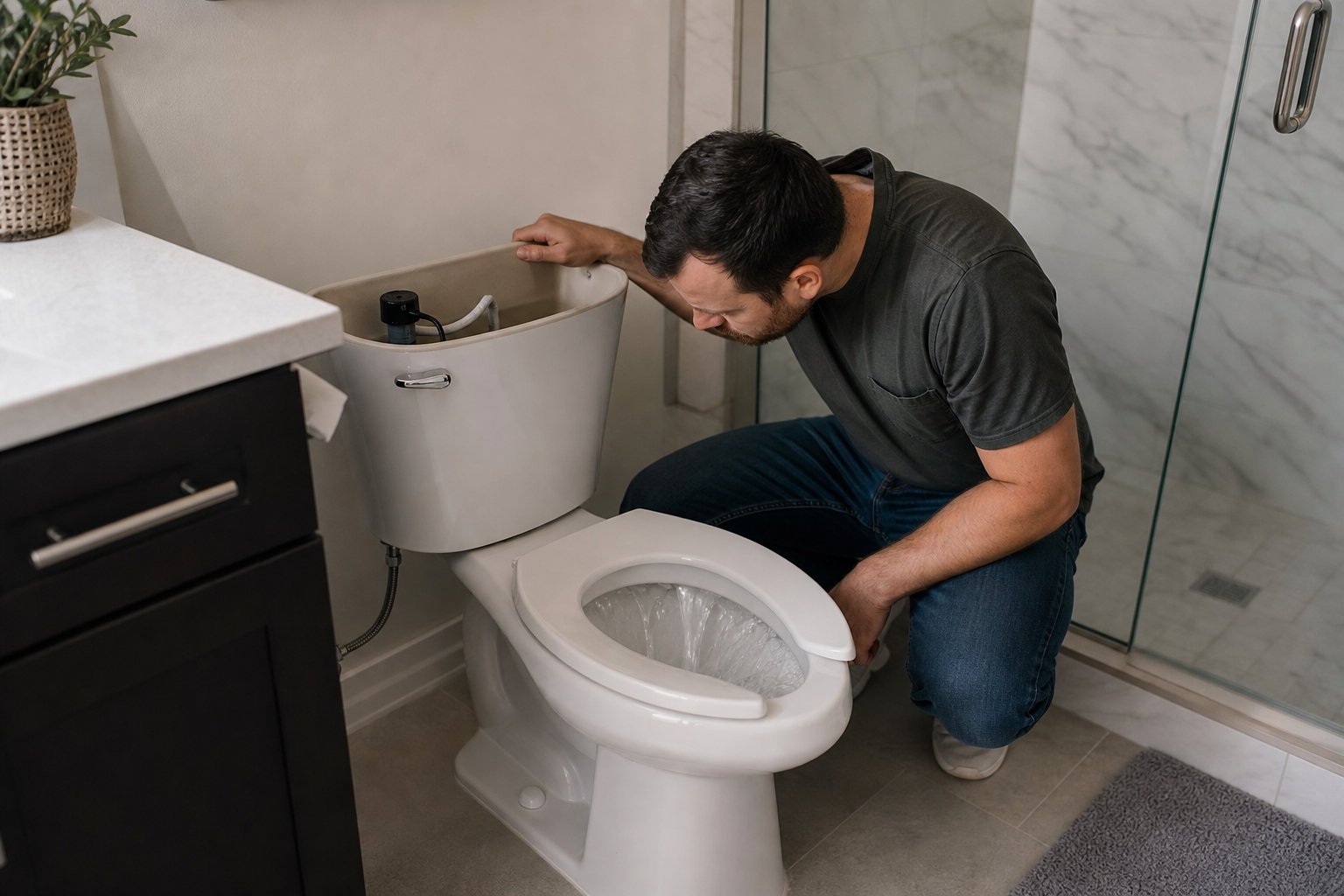
Here’s a quick test that can help determine what component needs to be replaced. Take a few drops of food coloring, place them in the toilet tank, and wait about 20–30 minutes. If the coloring reaches the bowl without a flush attempt, it indicates that your flapper is worn and needs to be replaced.
Constant hissing and squealing in the tank, incorrect water levels, and the tank taking longer to fill are due to a faulty filler valve.
Other faulty internal toilet components can cause hundreds of gallons of water to go missing every day, and many homeowners don’t realize the extent of the problem until the monthly water bill arrives.
The repair is often simple.
The cost of ignoring it usually isn’t.
FAQ: Ignored Plumbing Problems
How long can I safely ignore a small plumbing leak?
You shouldn’t ignore it at all. Even a minor leak can gradually damage cabinets, flooring, drywall, or framing materials. The longer it remains untreated, the more expensive the repair often becomes.
Why do slow drains keep coming back after I clear them?
Recurring slow drains often indicate a larger blockage deeper in the plumbing system. Grease buildup, mineral deposits, damaged pipes, or tree roots can all cause problems that temporary drain cleaners don’t fully resolve.
Can a running toilet really increase my water bill that much?
Absolutely. Depending on the severity of the problem, a running toilet can waste hundreds of gallons of water each day, noticeably increasing monthly utility costs.
What are the first signs of a hidden slab leak?
Common warning signs include unexplained increases in water bills, warm spots on the flooring, reduced water pressure, damp areas inside the home, or the sound of running water when no fixtures are being used.
Why do small plumbing problems seem to become emergencies at the worst possible time?
Because plumbing systems rarely repair themselves. Small issues often worsen gradually until a component finally fails, usually when the system is under additional stress from seasonal demand, age, or changing soil conditions.
Before We Go…
Most plumbing emergencies don’t arrive without warning.
The signs are usually there.
The question is whether homeowners recognize them before the situation becomes urgent.
Paying attention to small leaks, slow drains, unusual water bills, and other warning signs can help you avoid expensive surprises and keep your plumbing system operating the way it should.
Don’t Wait for a Plumbing Emergency
Nick’s Plumbing serves Houston, Katy, Cypress, The Woodlands, and surrounding areas. Schedule a professional inspection before a small annoyance becomes a major repair.
Call Now: (713) 868-9907 Schedule Online
Drain Cleaning • Leak Repair • VIP Maintenance