

Author: Jeff O'Hara
Hey! We heard congratulations are in order!
Your air conditioner survived another Houston summer!
Now, before you shut it down for the fall and winter seasons and completely forget it exists until next March, you might want to think about how it survived.
There’s a difference between an air conditioner finishing the summer in good condition and one that limped across the finish line with a dirty coil, sun-baked electrical components, restricted airflow, and a compressor that wishes it had been sent to live a nice, comfortable life in a state with seasons. Like Pennsylvania. Or Colorado. Even Alaska would have a preferable climate to Houston if you were to ask your air conditioner.
After months of scorching high temperatures, brutal humidity, and near-daily 24/7 operation, the early part of fall gives Houston homeowners an opportunity to see what summer left behind.
Your AC probably doesn’t want a retirement party. But it might appreciate a physical.
Houston Summers Leave a Mark
Every hour your air conditioner operated during the summer added a little more damage to a machine that was already struggling. The wear on motors, bearings, capacitors, contactors, and compressors is continuous. Dirt and grime have accumulated on evaporator and condenser coils. The air filter is clogged with months of airborne debris. Your condensate drain carried away gallons of water drawn from the Houston-humid air in your home.
None of this means something is wrong.
It’s simply what happens when mechanical equipment works incredibly hard for several months. And in Houston, summer is less of a season and more of an endurance event. Your air conditioner starts its busy season in late March, running for a couple of hours a day, slowly ramping up to days at a time during July and August, and finally winding back down around September.
So, since summer is the season your HVAC system spent getting the snot kicked out of it, wouldn’t that make fall a good time to find out what kind of damage all that overtime work left it with?
Start With Things You Noticed This Summer
Before touching the thermostat or walking outside to inspect the condenser, think about how your house actually felt during the hottest part of the year and ask yourself the following questions:
- Did your AC maintain the thermostat setting?
- Were some rooms consistently warmer than others?
- Did the system seem to run longer cycles than it did last summer?
- Was the house cool but excessively humid?
- Did your electric bills climb more than you expected?
- Did the system make any new noises?
- Did your AC ever offer to help with dinner or cleaning the attic?
A single “no” answer to any of these questions doesn’t necessarily mean that your air conditioner is about to fall apart. A few “yes” answers can, however, lead your technician to clues about how well the entire HVAC system performed when demand was at its highest.
A system that struggled during August isn’t likely to become more efficient simply because October arrived. It’s the weather that changed. The equipment didn’t.
Give the Air Filter a Look
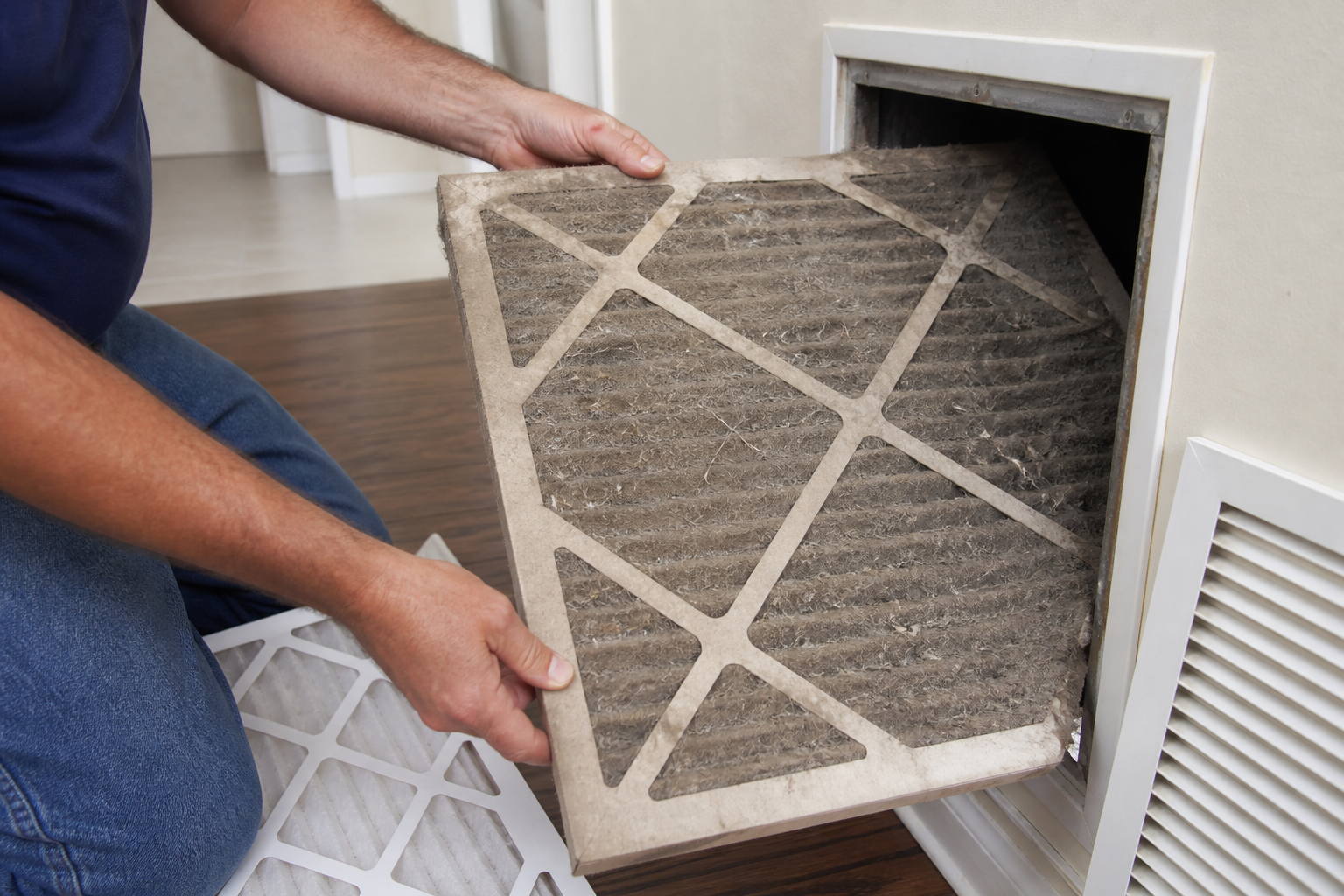
After a long summer, checking your air filter should be near the top of the list of things to do with your AC system in the fall. A filter loaded with dust, pet hair, pollen, and other debris restricts the amount of air your HVAC system can move. Reduced airflow can increase operating times, decrease comfort, and make the system work harder than necessary.
Don’t judge a filter entirely by the calendar, either.
A filter in a home with multiple pets may need replacement much sooner than the same filter in a lightly occupied home without animals. Remodeling, construction, open doors, and heavy summer use can also shorten its useful life.
Pull it out and look at it. If you’re debating whether it’s dirty enough to replace, you’ve probably already answered the question.
Take a Walk Around the Outdoor Unit
Your outdoor condenser has been sitting outside all summer.
It has seen things.
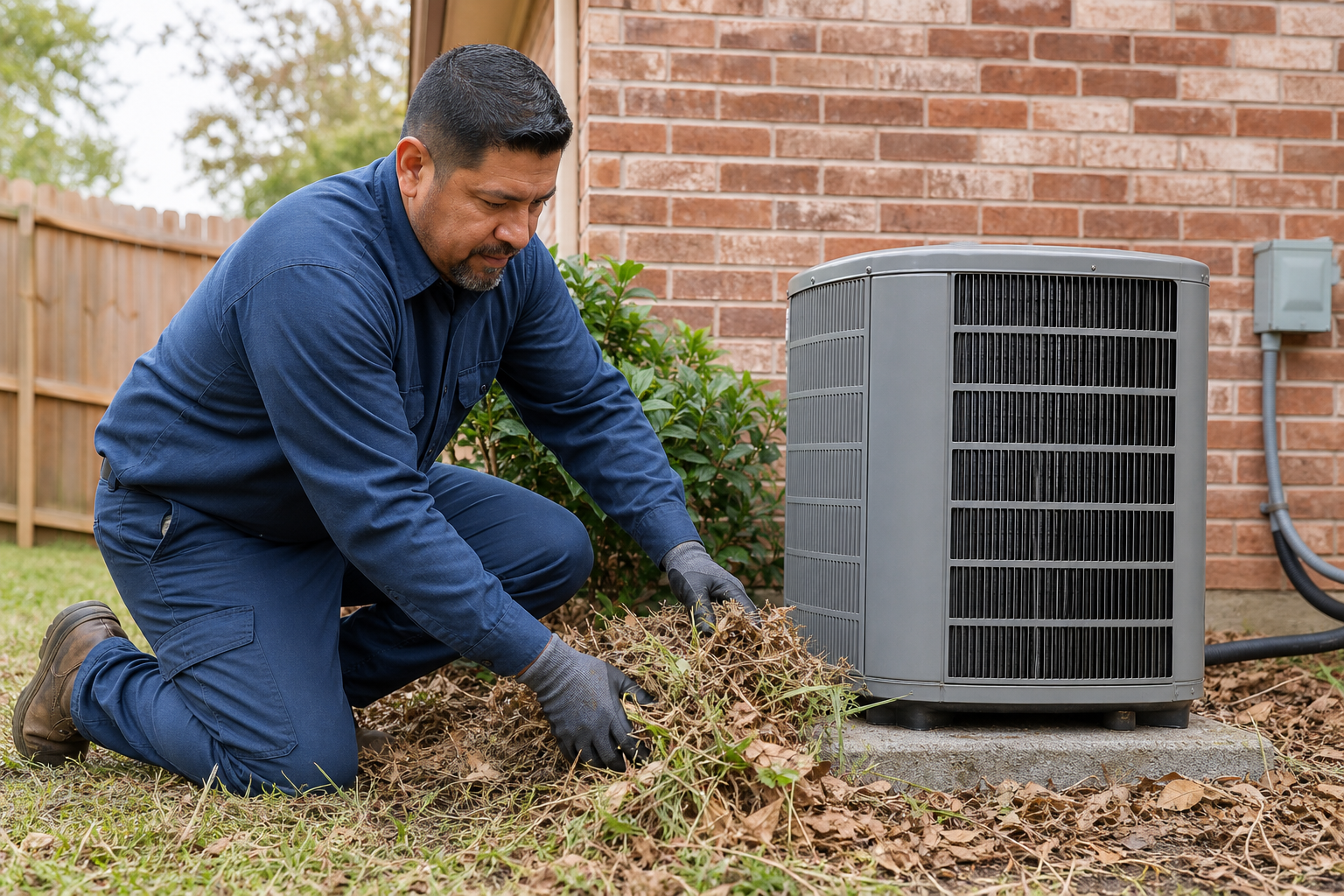
Grass clippings. Leaves. Dirt. Cottonwood. Storm debris. Mud. Weeds. And there’s that aggressive vine that has wrapped around it in a way that indicates that your condenser belongs to nature now.
Clear away any loose debris around the equipment and ensure shrubs and vegetation haven’t grown close enough to interfere with airflow.
The condenser’s job is to release the heat your AC removed from inside the house. Restricted airflow around the outdoor unit makes that job more difficult.
You don’t need to landscape around it like you’re preparing for a magazine shoot. Your condenser doesn’t care how the yard looks. It just needs room to breathe.
Check the Condensate Drain After Its Busiest Season
Your air conditioner doesn’t only cool your home.
It removes moisture.
During a Houston summer, that can mean producing a tremendous amount of condensation. The water collected at the evaporator coil eventually leaves through the AC condensate drain line.
Months of warm water and moisture can encourage algae and biofilm to develop inside that line. As buildup increases, drainage slows until water eventually has nowhere to go.
Depending on the location of your indoor equipment, a clogged condensate line can lead to water around the unit or moisture damage to ceilings, walls, insulation, and flooring.
If you’ve noticed water near the indoor unit, recurring drain problems, musty odors, or signs of moisture around the secondary drain, don’t wait for next summer to investigate.
Water appearing where it shouldn’t isn’t a reminder to house train the air conditioner.
Listen to Your AC Before Cooling Season Ends
Houston offers plenty of warm fall afternoons, so you’ll have opportunities to listen to your system before the heating season begins.
You already know what your air conditioner normally sounds like.
Pay attention if something has changed.
Buzzing, grinding, rattling, clicking, squealing, or a noticeably louder startup can indicate anything from a loose panel to a worn motor, weak capacitor, or another developing mechanical or electrical problem.
A strange sound doesn’t automatically tell you what’s wrong. That’s an important distinction. It tells you something has changed.
Let the sound be the reason you schedule an inspection, not your diagnosis of what the technician will find.
Schedule Your System For Its Post-Summer Physical
Spring maintenance prepares an HVAC system for the workload ahead.
Fall maintenance can tell you what the previous workload did to it.
A professional post-summer inspection can include checking electrical connections and components, inspecting coils, evaluating airflow, checking the condensate system, looking for signs of abnormal wear, and verifying that the system is operating as intended.
Don’t Forget About the Other Half of Your HVAC System
Houston’s first cold morning has a remarkable ability to remind thousands of homeowners that their furnace exists.
Preferably, that shouldn’t also be the morning you discover it doesn’t work.
Once temperatures begin settling down, run your heating system briefly before you actually need it. Make sure it starts normally, produces heat, and doesn’t immediately give you a reason to shut it back down.
A slight dusty smell during the first heating cycle of the season can occur as accumulated dust burns off. It is completely normal, and the accumulated gunk should finish cooking in two to four hours. Persistent burning odors beyond that first usage, other electrical smells, unusual noises, or a system that just decided not to operate normally deserve professional attention.
Finding a heating problem on a mild October afternoon beats discovering it during that first 40-degree morning.
Repair It Now or Think About Replacement?
Sometimes a post-summer inspection finds an isolated problem worth repairing.
Sometimes it confirms what the homeowner already suspected.
The system is getting tired.
If your air conditioner needed repeated repairs this summer, struggled to maintain comfortable temperatures, ran almost continuously, or produced increasingly expensive electricity bills, fall gives you time to consider your options without letting the oppressive weather make the decision for you.
Let Summer Grade Your Air Conditioner
Your air conditioner just completed the hardest part of its year.
Don’t waste the information that summer gave you.
If your system kept the house comfortable, maintained a controlled humidity level, operated quietly, and didn’t send the electric meter into orbit, that’s useful information.
If it struggled to barely maintain comfort, that’s useful information too.
Your AC survived another Houston summer.
Now is the time to find out whether it finished strong, or simply finished.
If it’s been a while since your HVAC system was professionally inspected, the licensed technicians at Nick’s Air Conditioning can evaluate its post-summer condition, identify developing problems, and help get the entire system ready for the seasons ahead.
Free estimates are available for system replacements, our 90-day warranty backs every repair. Give us a call at (713) 913-3577 to discuss your issue with one of our experts, or to schedule any maintenance, repair or replacement service.
Frequently Asked Questions
Should I have my AC serviced after summer?
A post-summer inspection can be especially useful after months of heavy operation. It gives a technician an opportunity to identify worn components, airflow problems, condensate drainage issues, and other developing concerns before the next cooling season.
Should I turn my air conditioner off once fall arrives?
Not necessarily. Houston can remain warm well into fall, so your AC may still be needed regularly. Use the system normally and adjust your thermostat based on comfort rather than the date on the calendar.
Why should I check my AC condensate drain after summer?
Houston’s humidity causes air conditioners to remove substantial moisture from indoor air. After months of operation, algae and biofilm can accumulate inside the condensate drain and eventually restrict water flow.
Is fall a good time to replace an old air conditioner?
It can be. If an older system struggled through summer or needs a major repair, fall gives you time to evaluate repair and replacement options without making an emergency decision during extreme heat.
Your AC Survived Houston Summer. Now What?
Nick’s can inspect your system, catch post-summer wear, and get you ready for fall and winter.
Call Now: (713) 913-3577 Schedule Online
AC Maintenance • Repair • Replacement