

Author: Jeff O'Hara
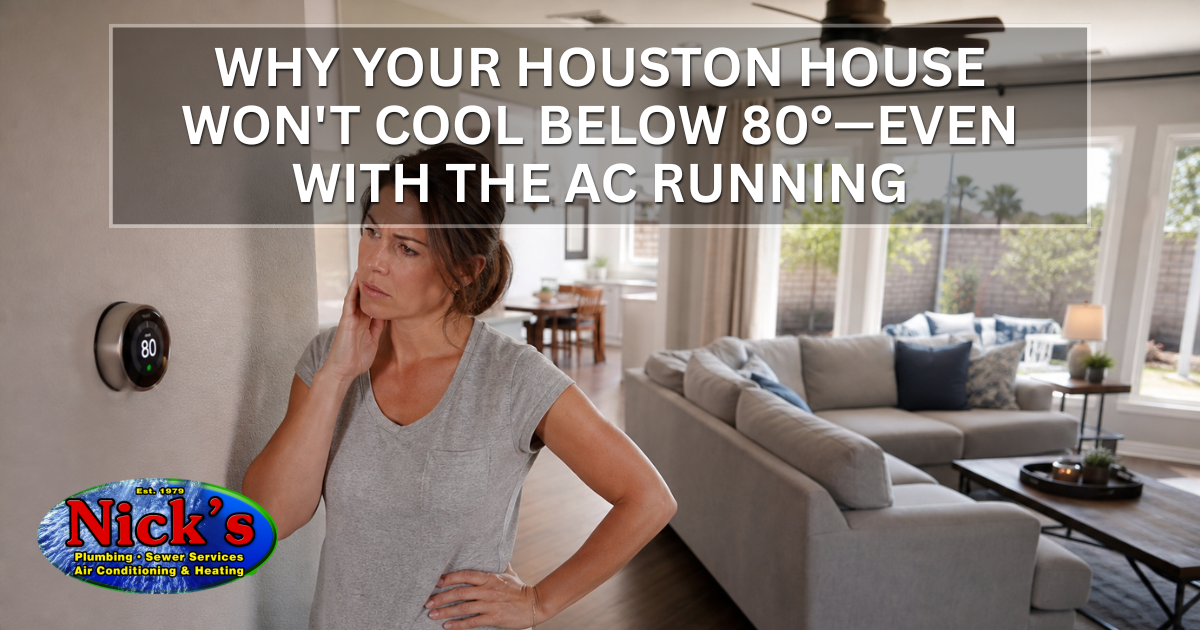
There’s another hot, humid Houston afternoon on tap for today, so by Noon you’ve already lowered the thermostat twice. First to 78. Then to 76. Maybe you even went all the way down to 68 out of pure frustration or to get some kind of reaction from your lazy AC unit.
—You check the thermostat again fifteen minutes later.
It’s 80°. Inside the house.
At this point, it feels like your thermostat is just ignoring you on purpose.
The truth is, your thermostat is probably doing exactly what it’s supposed to do. It’s your HVAC system telling you that your air conditioner can’t remove heat as quickly as your house is collecting it. The real question isn’t “why won’t the thermostat make it colder?”—it’s “why can’t your AC keep up?”
If your Houston HVAC system cannot cool your home below 80°, even though the air conditioner seems to be running nonstop, here’s some insight into what may be happening.
Your Thermostat Isn’t the Problem—It’s Reporting the Problem
We’ve been told time and again that if we get bad news, we shouldn’t shoot the messenger. So, of course it’s easy to blame the thermostat—mainly because it’s the one part of the system you interact with every day.
Most of the time, though, the thermostat is simply reporting what’s happening inside your home’s HVAC system. It measures the indoor temperature and tells the air conditioner when to run and for how long. But when the display still reads 80 degrees after hours of attempted cooling, it’s usually because the system is having a hard time removing heat fast enough to reach the temperature you’ve selected.
This is also why lowering the thermostat from 78 to 68 degrees doesn’t make your house cool any faster. The air conditioner doesn’t suddenly work harder because it understands your situation and empathizes with you. It doesn’t. It simply keeps running until it reaches that seemingly unachievable setting on the thermostat—or it completely seizes up and dies right in front of you.
Think of it this way: your thermostat isn’t refusing to listen. It’s just delivering bad news. Don’t shoot it.
Why Your AC Can’t Keep Up With a Houston Summer
Air conditioners everywhere work hard during the summer, but metro Houston adds a few extra challenges to the cooling process.
Extreme afternoon temperatures, high humidity, blazing sunshine, and attic temperatures that can climb well above 130 degrees all work against your cooling system. Every time someone opens the front door, cooks a meal, or sunlight pours through the west-facing windows, it creates more ambient heat that raises the temperature of the house while your AC is trying desperately to remove that heat.

Houston air conditioners don’t just battle heat—they battle humidity. Every gallon of moisture your system pulls out of the air takes time and energy. That’s energy that isn’t going directly toward lowering the temperature, which is one reason your home can feel uncomfortable during long stretches of hot, muggy weather—even when the AC seems like it never shuts off.
When airflow or refrigerant problems are added to Houston’s heat and humidity, the system can fall even farther behind. In some cases, those same conditions can eventually contribute to a frozen evaporator coil, turning an already uncomfortable afternoon into a complete loss of cooling.
Sometimes the weather is simply demanding more than the system can comfortably handle. Other times, a mechanical problem is preventing the air conditioner from performing the way it should. The challenge is figuring out which situation you’re dealing with.
A Few Things You Can Check Before Calling Nick’s
Not every cooling problem requires professional repairs. There are a few simple things homeowners can safely inspect before scheduling a service visit.
Start with the air filter. A dirty filter restricts airflow, making it harder for your system to move cool air throughout the house. If it looks dirty or clogged with dirt and debris, replacing it can actually improve performance.

Next, make sure your supply registers are open and unobstructed by furniture, rugs, or curtains. Closed vents can reduce airflow and make certain rooms feel warmer than others.
Take a quick look at the outdoor condenser as well. Grass clippings, leaves, and other debris can restrict airflow around the unit, reducing its ability to release heat outside.
Finally, double-check that your doors and windows are closed tightly. During a Houston summer, even small amounts of warm, humid outdoor air can make your air conditioner work harder.
If those simple checks don’t explain why your home won’t cool below 80°, the next step usually requires testing—not guessing. Issues like low refrigerant, electrical problems, failing components, or airflow restrictions inside the system can’t be confirmed by looking at the thermostat alone.
When an 80 Degree House Is Trying to Tell You Something, You Should Listen
Context matters.
If your air conditioner has always struggled during the hottest afternoons of the year, it may be reaching the limits of its capacity when outdoor temperatures soar.
But if your house normally cools to 72 or 74 degrees and suddenly refuses to drop below 80°, that’s a different situation entirely.
A noticeable change in performance often points to something that has changed within the system.
You may notice warm air coming from the vents instead of cool air. The system may run almost continuously without making much progress. Indoor humidity may start climbing, making the house feel sticky even if the temperature isn’t changing much. You might even notice ice forming on refrigerant lines or hear unfamiliar noises while the equipment is running.
None of those symptoms automatically identify the problem, but they do indicate that your air conditioner isn’t operating the way it should. Catching the issue early often prevents additional wear and can help avoid a complete breakdown during one of Houston’s hottest weeks.
Don’t Wait Until the System Stops Completely
An air conditioner that’s struggling to cool your home rarely fixes itself.
The longer it runs continuously without reaching the thermostat setting, the more wear it places on components that are already working overtime. At the same time, your energy bills continue climbing while your comfort continues falling.
Having the system inspected before it stops cooling altogether often provides more repair options and may help prevent a larger problem later in the season.
If your Houston home won’t cool below 80 degrees, the licensed HVAC professionals at Nick’s Plumbing & Air Conditioning can inspect your system, identify what’s limiting its performance, and recommend the right solution to help restore your comfort.
FAQ
Is it normal for my AC to run all day during a Houston summer?
On extremely hot days, it’s normal for an air conditioner to run longer than usual. However, if it runs continuously and still can’t reach the thermostat setting, it’s worth having the system evaluated.
Can a dirty air filter really keep my house from cooling?
Yes. A severely clogged air filter, and other effects of neglected maintenance, can restrict airflow enough to reduce cooling performance and, in some cases, contribute to a frozen evaporator coil.
Why does my house feel hotter in the afternoon?
Afternoon sunshine, rising outdoor temperatures, heat entering through windows, attic heat, and high humidity all increase the cooling load on your home. That’s often when existing HVAC problems become most noticeable.
Stuck at 80° With the AC Running?
Nick’s can inspect your system, identify what’s limiting performance, and help restore comfort before a struggling AC becomes a full breakdown.
Call Now: (713) 913-3577 Schedule Online
AC Repair • Airflow Diagnostics • Houston Area