

Author: Jeff O'Hara
You open your electric bill.
You stare at the number in the “What You Owe” box for a second.
Then you look over at the thermostat like it owes you an explanation.
Where did it all go wrong?
Your air conditioner has been running almost nonstop since April, but that’s nothing new. It did the same thing last summer, and you don’t remember electric bills with commas in the totals.
Why does this month’s bill feel like it should have gone to someone cooling a shopping mall instead of a single-family home?
It’s tempting to blame rising electricity prices—and they certainly don’t help—but they’re usually only part of the story.
By August, your air conditioner has already spent months battling Houston’s relentless heat and humidity. If your system is dirty, low on refrigerant, aging, or simply losing efficiency, August is often the month when those small problems start making themselves known, and one painful way to do that is raising your electric bill.
Let’s seriously break down why your cooling costs tend to peak this time of year—and what you can do about them.
Your Air Conditioner Has Been Working Overtime Since Spring
That August electric bill didn’t begin in August.
It really began back in March.
That’s when Houston’s cooling season starts ramping up. By April, your air conditioner is running regularly. By June, it’s been working hard every afternoon. In July, it’s running day and night to alleviate heat by day and humidity at night. Come August, it has already logged thousands of hours trying to keep your home comfortable.
Every cooling cycle adds a little wear to motors, capacitors, contactors, fan bearings, and other components. Dust gradually collects on coils. Air filters become loaded with debris. Refrigerant levels don’t magically improve if there’s a leak.
None of these things usually cause a dramatic breakdown overnight.
Instead, they quietly reduce efficiency little by little until the hottest month of the year exposes every weakness.
Small Efficiency Losses Become Big August Bills
Most homeowners expect an air conditioner to either work…
…or not work.
Your aging or maintenance-neglected system will still cool the house, but it will be using significantly more electricity than it did last year. Next year, it will require even more energy to achieve the desired comfort level than it did this year.
Question: What can cause your HVAC system to lose efficiency to the point that it is heavily impacting your monthly electric bill?
It’s usually not a single catastrophic failure that diminishes the system’s efficiency. It’s more like a death by a thousand small cuts.
A dirty air filter forces the blower to work harder to move air through the system.
Dust-coated condenser coils make it more difficult to release heat outdoors.
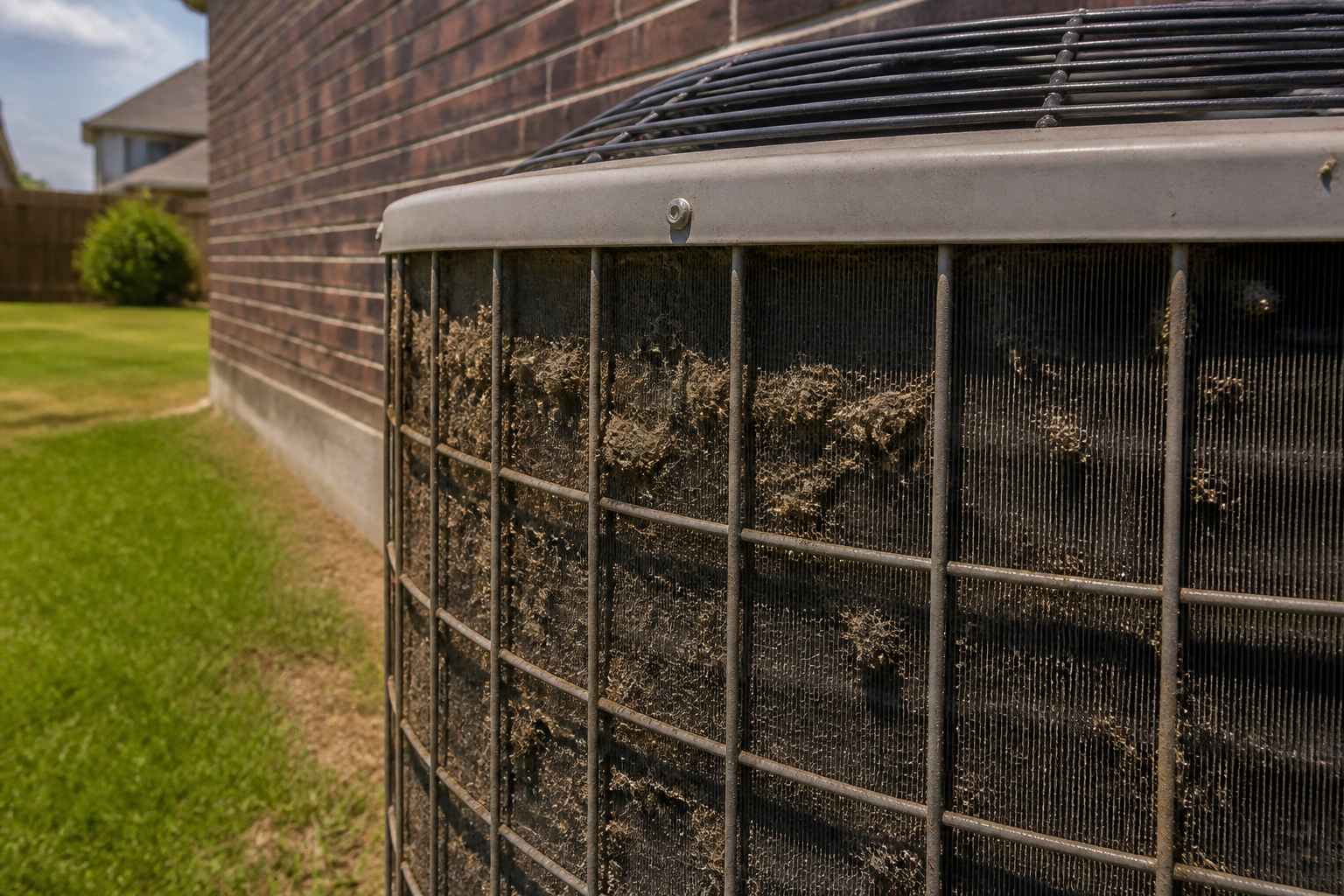
A dirty evaporator coil reduces the system’s ability to absorb heat from inside your home.
Low refrigerant can force the compressor to run longer than necessary while struggling to reach the thermostat setting.
Even slightly leaking ductwork allows cooled air to escape into the attic before it ever reaches your living room.
By themselves, none of these problems may seem dramatic.
Together, however, they can add hours of runtime every week during Houston’s hottest weather. Longer runtime almost always means a higher electric bill.
Where Your Money Is Actually Going
One of the biggest misconceptions homeowners have is that a high electric bill means their air conditioner is working harder.
More often, it means your air conditioner is working longer.
Imagine taking a road trip with one tire that’s low on air. Your car still gets you where you’re going. It just uses more fuel doing it.
An inefficient HVAC system behaves in much the same way.
It will eventually reach the desired temperature—but it has to run longer, consume more electricity, and put additional wear on expensive components to get there.
You’re not necessarily paying for colder air.
You’re basically paying your electricity provider overtime rates to pick up the slack your elderly HVAC system leaves behind.
Houston Summers Make Every Small HVAC Problem Bigger
Every air conditioner in the world works hard during the summer.
Every single AC system installed in the southeast Texas region is expected to go “above and beyond” to do its job.
This combination of extreme heat, high humidity, long cooling seasons, and warm nights gives HVAC systems very little opportunity to rest. While homeowners in some parts of the country enjoy cool evenings that give their air conditioners a break, Houston often stays hot long after sunset.
And of course, our legendary humidity makes matters even more challenging.
Your air conditioner isn’t just cooling the air. It’s removing moisture from it, too. Every gallon of humidity your system pulls from your home’s air requires energy that isn’t going directly toward lowering the temperature.
That’s one reason August often produces the highest utility bills of the year.
The weather is asking your air conditioner to do two demanding jobs at once.
The One Thing Homeowners Usually Get Wrong
Many homeowners assume that because their house eventually reaches the thermostat setting, everything must be working normally, and that’s not always the case.
An aging or inefficient system can still keep your home comfortable, but it may quietly use far more electricity than it should.
If your electric bills have steadily increased each summer—even though your family’s habits haven’t changed—your air conditioner may be telling you something.
Efficiency problems often appear on the utility bill long before they become obvious inside the house.
Sometimes the first warning sign isn’t warm air. It’s a bill with a comma in the Amount Due section waiting in your mailbox.
When Repair Makes Sense—and When Replacement Might, Too
Fortunately, not every high electric bill means you need a new air conditioner.
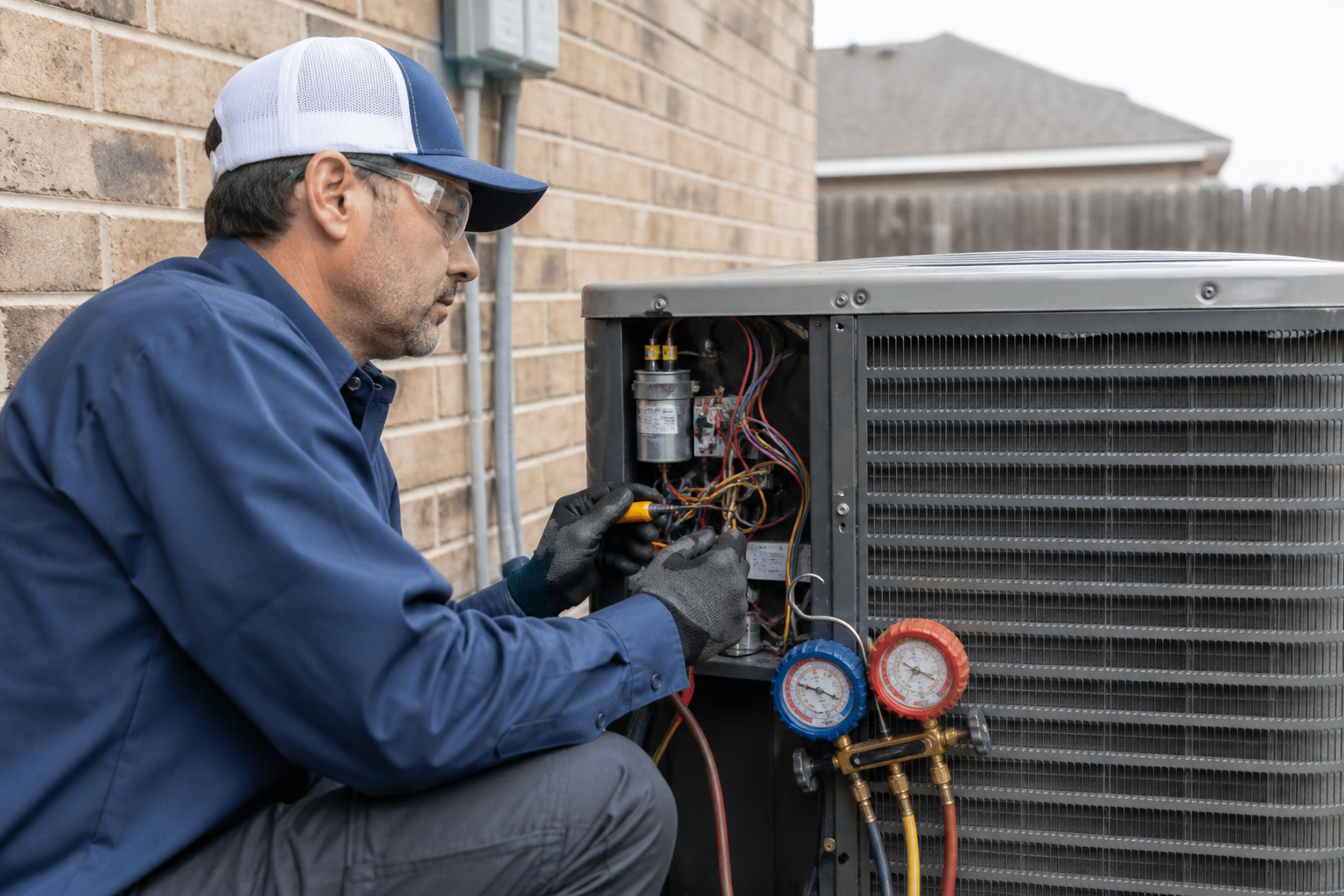
Scheduling routine maintenance, replacing a filthy air filter, cleaning dirty coils, repairing refrigerant leaks, or correcting airflow and ductwork problems can often restore most of your system’s lost efficiency.
Now, if your air conditioner is in the 15- to 20-year-old range, has already needed several repairs, or struggles every summer despite regular maintenance, replacement may become the more economical long-term decision.
Many homeowners actually choose to replace aging systems during the fall.
Demand is often lower than during the peak summer season, scheduling tends to be more flexible, and you’ll have your new system installed before the next Houston heat wave arrives.
Modern high-efficiency systems from our partners at Daikin can also greatly reduce energy consumption while providing more consistent comfort throughout your home.
Don’t Ignore What Your Electric Bill Is Trying to Tell You
A high August electric bill generally isn’t caused by one major problem. More often, it’s the result of several small efficiency losses that have quietly accumulated throughout the cooling season.
Your air conditioner may still be doing its job.
It just may not be doing it as efficiently as it once did.
If you’ve noticed rising energy costs, longer cooling cycles, or your system just seems to be working harder than it used to, without producing comfort results that match the effort.
Your licensed HVAC professional from Nick’s Air Conditioning can inspect your system, identify what’s affecting its performance, and recommend the right solution to improve your comfort and efficiency.
Free estimates are available for system replacements, and every repair is backed by our 90-day warranty. To schedule service, call (713) 913-3577.
Frequently Asked Questions
Why is my electric bill always highest in August?
August is typically Houston’s hottest month, and your air conditioner has already been working continuously for several months. Higher outdoor temperatures, humidity, longer run times, and reduced HVAC efficiency can all contribute to higher energy bills.
Can a dirty air filter really increase my electric bill?
Yes. A clogged air filter restricts airflow, forcing your HVAC system to work harder and run longer to cool your home. Replacing a dirty filter is one of the easiest ways to help maintain efficiency.
How do I know if my AC is losing efficiency?
Common signs include higher year-over-year electric bills, longer cooling cycles, rooms that don’t reach the desired temperature, increased indoor humidity, and more frequent repairs.
Is fall a good time to replace my air conditioner?
For many homeowners, yes. Fall often provides greater scheduling flexibility, and replacing an aging system before the next cooling season helps ensure you’re ready for Houston’s summer heat.
Sticker Shock on Your August Electric Bill?
Nick’s can inspect your system, find efficiency losses, and recommend repair or replacement options before next summer’s heat arrives.
Call Now: (713) 913-3577 Schedule Online
AC Maintenance • Repair • High-Efficiency Replacement