


Author: Jeff O'Hara
Buying a Houston home is already a full-contact sport.
You are negotiating price, worrying about the roof, squinting at foundation notes, and trying to remember whether the previous owners actually replaced the water heater or just power-washed the listing photos.
Meanwhile, the HVAC system sits there looking perfectly ordinary.
Outdoor unit in the yard. Thermostat on the wall. Vents in the ceiling. Nothing dramatic.
That calm exterior is exactly why HVAC surprises are so expensive after closing. In Houston, cooling is not a seasonal luxury. It is a year-round utility with a short heating season bolted on. If the system is aging, undersized, leaking into the attic, or one clogged drain line away from a ceiling stain, you will find out fast.
Here are the HVAC red flags buyers should catch before the moving truck arrives.
Age Is Not Just a Number on the Data Plate
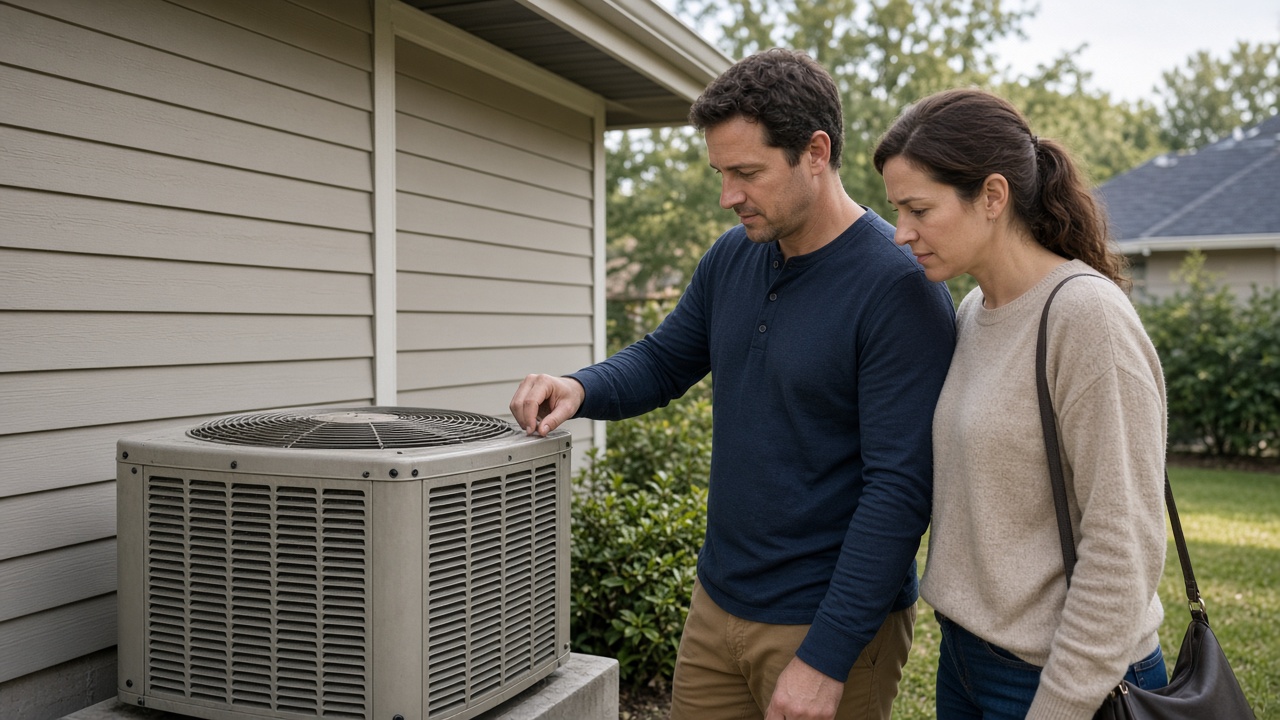
Start with the manufacturing date on the outdoor unit and air handler or furnace. Model and serial numbers usually tell the story, and sellers who cannot produce them are leaving you to play detective under time pressure.
Houston air conditioners work hard for most of the calendar. Many systems live in the 10-15 year conversation well before similar equipment would in a milder climate. An older unit is not automatically a deal-breaker, but it changes the budget conversation.
Ask yourself:
- Is this system near the end of a typical Houston service life?
- Have recent repairs been frequent?
- Would a major failure during the first summer force an emergency replacement?
Buying a home with a 14-year-old condenser and no replacement plan is like buying a car with 180,000 miles and hoping the transmission enjoys the commute.
Efficiency Labels Matter More Than Listing Adjectives
“Newer AC” in a listing is marketing. Efficiency ratings are information.
Older SEER ratings do not map cleanly to today’s standards. Current systems are evaluated under SEER2, which better reflects real-world duct resistance and airflow. A low-efficiency system can cool the house and still leave you with electric bills that feel like a second mortgage every August.
Red flags include:
- Very old equipment with no efficiency documentation
- A mismatched outdoor unit and indoor coil
- Claims of high efficiency with no model numbers to verify
- A “brand new” condenser paired with an ancient air handler
Half a system replacement is a classic Houston surprise. The shiny outdoor unit looks great in photos. The indoor equipment may still be living in another decade.
Ductwork Can Quietly Ruin a Good System
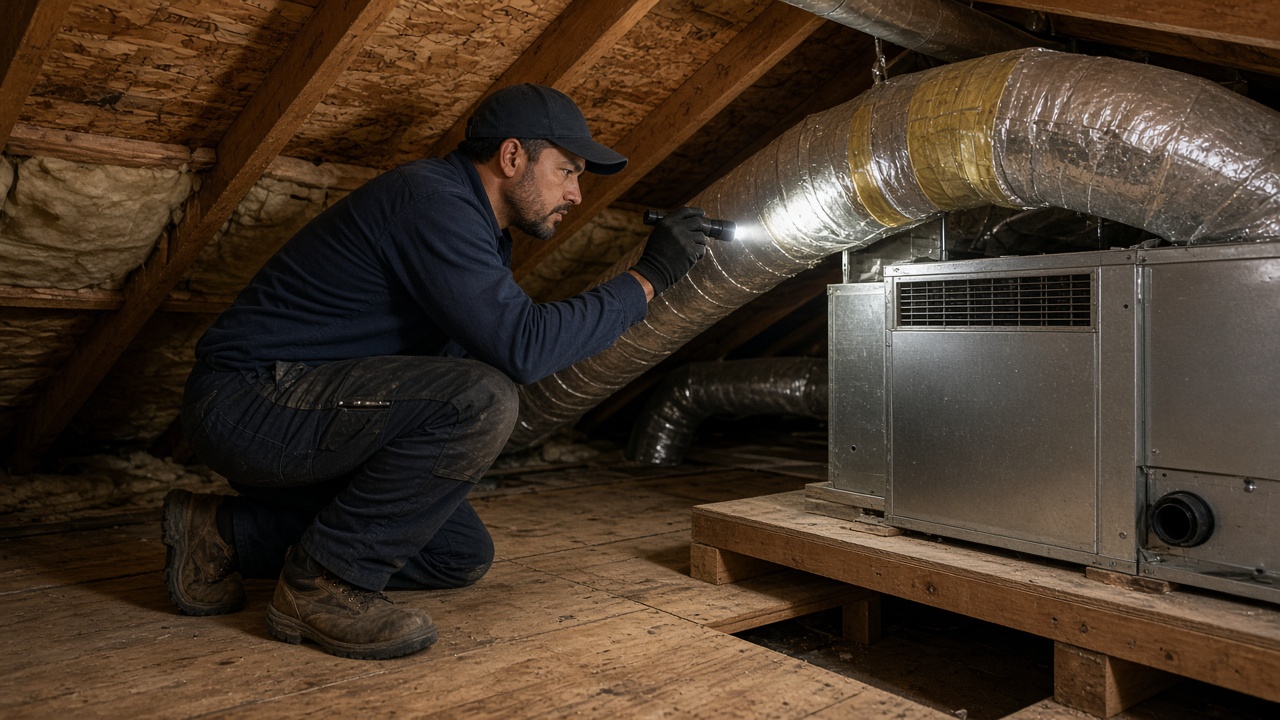
In many Houston homes, a large share of the ductwork lives in a hot attic.
That environment is tough on flexible ducts, connections, insulation, and sealing. Leaky, crushed, disconnected, or poorly supported ducts dump conditioned air into the attic instead of bedrooms. Buyers feel it later as uneven rooms, weak airflow, and bills that never match the “efficient system” promise.
Look and listen for:
- Rooms that never seem to catch up with the thermostat
- Supply vents with weak airflow compared with others
- Visible disconnected or kinked ducts in attic access areas
- Excessive dust around registers shortly after cleaning
- A home that feels stuffy even while the system runs
A strong outdoor unit connected to failing ducts is still a weak comfort system. The air has to arrive where people live.
Houston Reality Check
A general home inspection can catch obvious HVAC issues. It is not the same as a dedicated HVAC evaluation.
Home inspectors are looking at the whole house under time limits. HVAC technicians are looking at airflow, drains, electrical components, refrigerant-related symptoms, safety controls, duct condition, and whether repair or replacement is the smarter near-term path. If the home is older, the system is aging, or comfort already feels uneven during the showing, budget for a specialist look before you waive contingencies.
Drain History Is a Ceiling-Stain Waiting to Happen
Houston humidity means AC systems make a lot of condensate. That water has to leave through a drain line. When the drain clogs, overflow pans fill, float switches trip, and sometimes ceilings become unplanned water features.
Ask about:
- Past condensate overflows or ceiling repairs near the air handler
- Whether the drain line has been cleaned regularly
- Evidence of rusted pans, water stains, or improvised drain routing
- Repeated service calls for the system “shutting off” on humid days
A clean drain history is not glamorous. It is still one of the most practical buyer questions in this climate.
Comfort Clues During the Showing
You do not need gauges to notice patterns.
Pay attention while you walk the house:
- Uneven temperatures: upstairs roasting, downstairs freezing, or one wing that never cools
- Short cycling: the system starts and stops constantly instead of settling into longer runs
- Strange sounds: rattling, grinding, squealing, or a condenser that struggles to start
- Musty or burnt smells: especially near the air handler or supply vents
- Ice or heavy sweating: on refrigerant lines or the indoor coil area when cooling
- Blocked outdoor unit: fences, plants, or debris choking airflow around the condenser
Any one clue can have a simple explanation. Several at once usually means you should stop assuming the HVAC is “fine because the house feels okay today.”
Missing Maintenance Records Are Their Own Red Flag
Ask the seller for service history.
Regular maintenance invoices, filter notes, drain cleanings, and repair receipts tell you how the system was treated. A well-maintained older system can outlast a neglected younger one. A home with no records, no filter evidence, and a “we just call someone when it breaks” approach is asking you to inherit deferred maintenance.
Also ask whether refrigerant work was ever performed. Repeated top-offs without a documented leak repair are not a maintenance plan. They are a countdown.
Sizing and Additions Change the Math
Houston homes get remodeled.
Sunrooms appear. Garages become offices. Second-story additions arrive with hopes and prayers for the original duct system. If the floor plan grew and the HVAC did not, comfort problems are not mysterious. They are arithmetic.
Watch for:
- Additions cooled by a single extra supply run
- Converted attic or garage spaces with weak airflow
- A thermostat location that never represents the rooms you will live in
- Two-story homes with no zoning and chronic upstairs heat
Sometimes the answer is better duct design. Sometimes it is equipment replacement. Sometimes a ductless mini-split for a problem zone is the practical fix. The red flag is pretending the existing system was designed for a house that no longer exists.
What Buyers Should Do Before Closing
You do not need to become an HVAC technician. You do need a process:
- Get equipment ages, model numbers, and any seller maintenance records.
- Note comfort issues during showings and the official inspection.
- Look at attic ducts, the air handler area, and outdoor clearances when access allows.
- Ask specifically about drain overflows, refrigerant repairs, and recent major parts.
- If anything looks uncertain, schedule a dedicated HVAC inspection before you finalize.
That last step is the one buyers skip most often and regret most clearly after July arrives.
Negotiate With Facts, Not Fear
An HVAC red flag does not always mean walk away.
It means price the risk. Repair credits, replacement allowances, or seller-paid service can all make sense when the findings are specific. Vague worry helps nobody. Documented age, duct leakage, drain damage, mismatched equipment, or failing components give you something real to negotiate.
Closing day should not be the first time you learn the air conditioner is one Houston summer from retirement.
If you are under contract on a Houston home and want a clearer read on the HVAC system, the licensed technicians at Nick’s Air Conditioning can inspect the equipment, evaluate airflow and drain conditions, and explain whether you are looking at routine service, meaningful repairs, or a near-term replacement decision.
Free estimates are available for system replacements, our 90-day warranty backs every repair, and you can call (713) 913-3577 to schedule an HVAC inspection or service visit.
Frequently Asked Questions
Is a general home inspection enough for the HVAC system?
A general home inspection can flag obvious issues, but it is not a full HVAC evaluation. Buyers who want clearer answers on age, efficiency, duct condition, airflow, and repair-versus-replace risk often schedule a separate HVAC inspection before closing.
How old is too old for an AC in Houston?
There is no single cutoff, but many Houston systems face heavy cooling demand for most of the year. Equipment approaching or past the typical 10-15 year range deserves closer scrutiny, especially if repairs have been frequent or efficiency is far behind current standards.
What HVAC documents should I ask the seller for?
Ask for maintenance records, repair invoices, equipment model and serial numbers, filter change history if available, and any notes about drain line cleanings, refrigerant work, or duct repairs. Missing paperwork is not automatic proof of a problem, but it leaves more unknowns.
Can duct problems be a bigger issue than the outdoor unit?
Yes. In Houston attics, leaky, crushed, disconnected, or poorly sealed ductwork can waste cooled and heated air before it reaches living spaces. A newer outdoor unit connected to failing ducts can still leave rooms uncomfortable and bills higher than expected.
Buying a Houston Home? Get the HVAC Checked.
Nick’s can inspect age, ducts, drains, and system condition so surprises show up before closing, not in July.
Call Now: (713) 913-3577 Schedule Online
HVAC Inspection • AC Repair • System Replacement