

Author: Jeff O'Hara
Air conditioners rarely fail without warning.
For many families, replacing an air conditioner is one of the largest unexpected expenses they’ll ever face. When a system finally decides to get its gold watch and retire during a typically brutal Houston summer, homeowners often find themselves scrambling for temporary solutions — window units, portable air conditioners, or enough box fans to make the house sound like a small airport.
Here’s how this happens. Most homeowners can’t recognize the warning signs of impending HVAC doom until they’re sitting in a hot house, waiting for an emergency repair appointment, and wondering how they’ll pay for a replacement system they didn’t expect to need.
The good news is that most air conditioners will provide plenty of clues before they reach the end of their useful life. For the homeowner to prevent a catastrophic air conditioner failure, it is crucial that they know how to spot the early signs.
This foresight allows some time to plan ahead, avoid those mid-summer emergency breakdowns, and make a smarter decision about whether repair or replacement makes the most sense.
How Long Should an Air Conditioner Last?
Most modern residential air conditioning systems are designed to provide between 12 and 15 years of reliable service. That said, lifespan outliers exist at both ends of the spectrum: a builder’s-grade AC system in a new home may fail after just five or seven years, while many systems installed in the early 2000s are still keeping families comfortable today.
Of course, like any major home appliance, its lifespan depends solely on the homeowner’s behavior regarding use and maintenance.
In Houston, AC systems have an extremely difficult task every summer. Long cooling cycles, high humidity, and extended periods of extreme heat force systems to run far more often — and for far longer — than they would in a more temperate, friendlier environment.
Bear in mind, age alone doesn’t determine whether replacement is necessary. Instead, performance history, reliability, and repair frequency will tell a much more complete story.
Signs Your AC May Be Nearing the End of Its Life
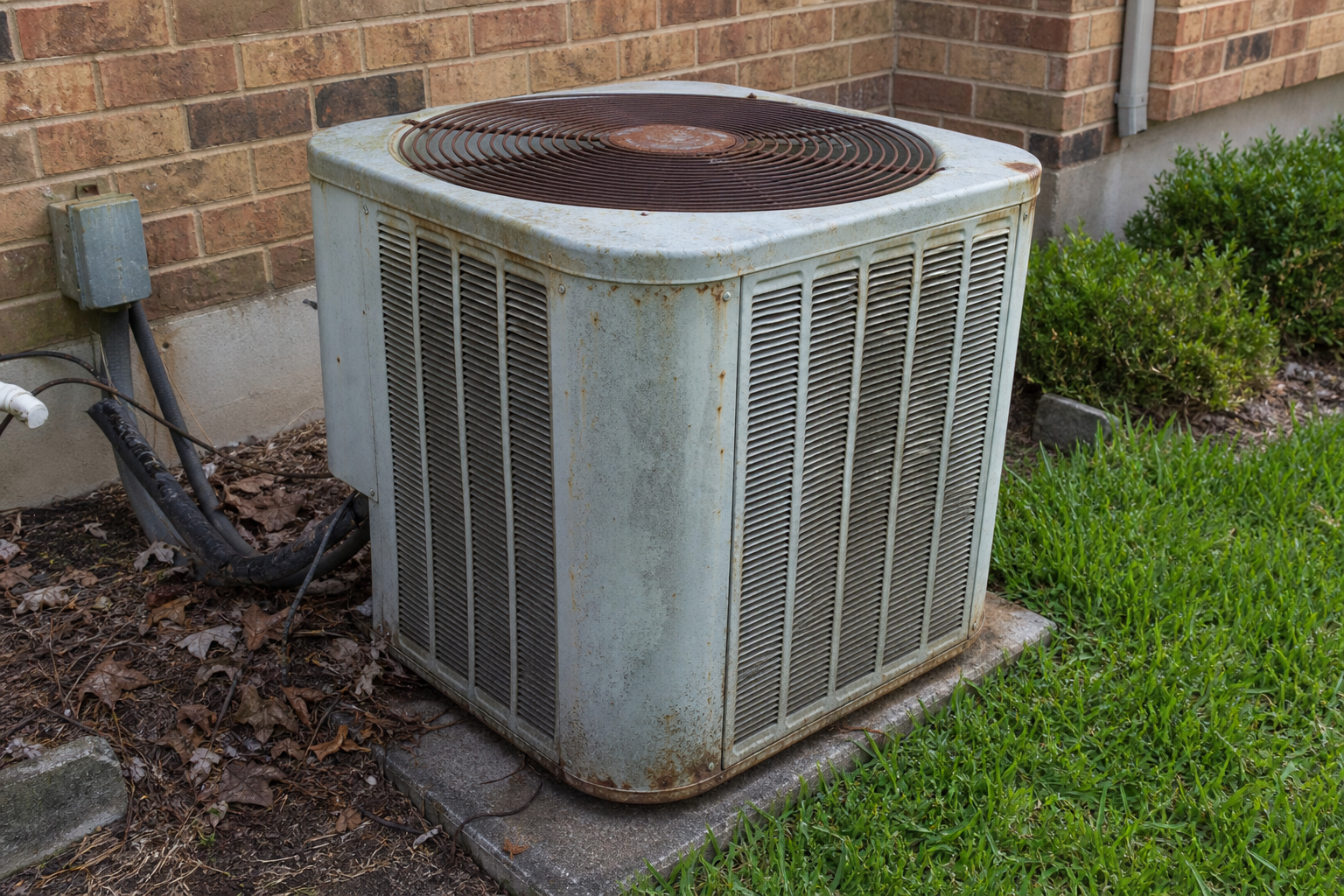
Out of all the common signs of an air conditioner’s aging out, declining performance is easily the first, and the most crucial to notice early. It isn’t a symptom that kills your AC at once; it’s more like a death by 1,000 pin pricks. There are so many components in an older HVAC system that can fail or fall out of alignment with their original specifications that the customer certainly can’t make a proper repair or replacement decision without assistance from a professional HVAC company.
If your air conditioner hasn’t been cooling properly, struggles to maintain the set temperature, or runs continuously in conditions it previously handled with ease, the system is losing its battle with age, and that extra work on your AC unit reduces its overall efficiency.
You may also notice that certain rooms no longer seem comfortable. This is especially common in larger homes throughout areas like Katy and The Woodlands, where cooling demands can vary significantly throughout the house.
Rising energy bills can also be an important clue. As systems age, they often consume more electricity while producing less cooling. If your utility costs continue climbing despite similar usage habits, your HVAC system may be working harder than it should.
Strange noises are another warning sign. Grinding, squealing, rattling, or banging sounds often indicate worn components that may be approaching failure.
And then there are repairs.
One repair doesn’t necessarily mean it’s time to replace your system. However, when repairs begin happening regularly, it’s often a sign that multiple components are aging at the same time.
When Repair Still Makes Sense
Not every HVAC problem requires replacement.
If your system is newer than 5 years old, has been consistently maintained, and the fix involves only a single component, repairing the unit is often the most economical choice. For example, replacing a capacitor, contactor, or fan motor is very different from replacing a compressor in a fifteen-year-old system.
The goal isn’t to avoid repairs altogether. The goal is to determine whether the repair meaningfully extends the system’s life.
When Replacement Starts Making More Sense
There comes a point where continuing to repair an older system simply stops making financial sense.
If your system is more than a decade old, struggles to cool the home effectively, and seems to need attention every summer, replacement may provide better long-term value.
This is particularly true if major components are failing.
Homeowners in neighborhoods like The Heights often face this decision when older systems begin experiencing recurring issues that become increasingly expensive to address.
Replacing a system before it completely fails also provides more flexibility. Instead of making a rushed decision during a heat emergency, homeowners can evaluate options, compare equipment, and choose a solution that fits their budget and comfort goals.
The Importance of Regular Maintenance
One of the biggest factors affecting AC system lifespan is maintenance.
Routine maintenance helps identify worn components before they fail, improves efficiency, and allows technicians to spot developing issues long before they become expensive repairs.
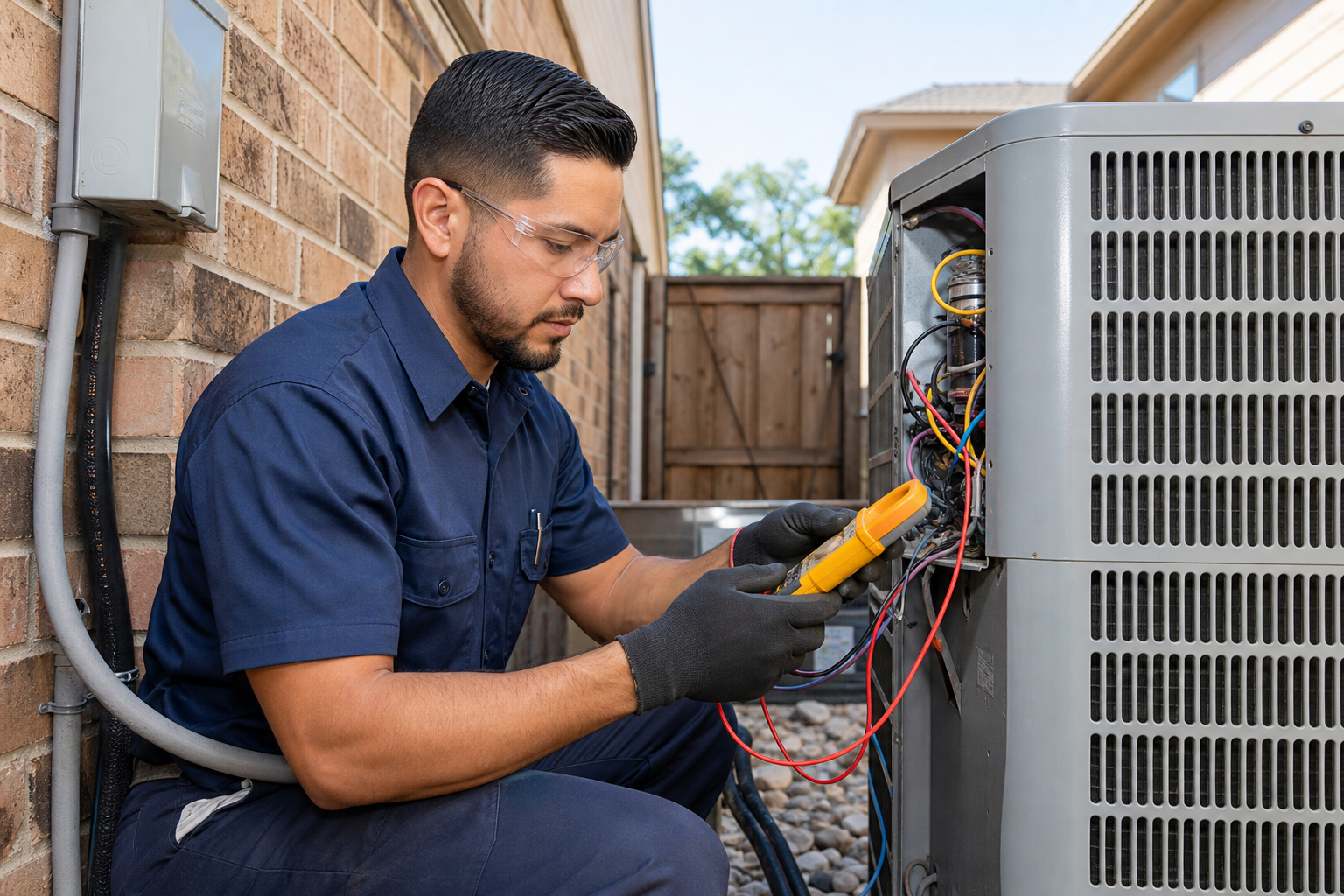
In many cases, the difference between a system lasting 10 years and 15 years comes down to how consistently it was maintained.
Maintenance doesn’t eliminate breakdowns entirely, but it dramatically reduces the chances of being caught off guard by one.
How Smart Monitoring Changes the Game
Modern technology has made preventative maintenance even more effective.
Nick’s VIP Maintenance Plan helps homeowners stay ahead of HVAC problems by continuously monitoring system performance and alerting technicians to certain developing issues before they become major failures.
Instead of waiting for a compressor to fail or a blower motor to stop working, homeowners gain visibility into system health while there is still time to act.
That early warning can often mean the difference between a manageable repair and a complete system replacement.
Why Many Homeowners Are Choosing Daikin Systems
When replacement eventually becomes necessary, many homeowners are prioritizing efficiency, reliability, and comfort.
Daikin systems have become increasingly popular because of their advanced inverter technology, improved humidity control, and ability to maintain more consistent indoor temperatures.
Rather than constantly cycling on and off, inverter-driven systems adjust output based on demand, helping improve efficiency while reducing wear on major components.
In Houston’s climate, where air conditioners operate much of the year, those advantages can translate into noticeable improvements in both comfort and energy use.
FAQ: Repairing vs. Replacing Your AC
How do I know whether to repair or replace my AC?
Generally, replacement becomes worth considering when repairs become frequent, major components fail, or the system struggles to maintain comfort despite repairs.
How long does an AC system usually last?
Most residential systems last between 12 and 15 years, although proper maintenance can extend that lifespan.
What is the biggest warning sign of AC failure?
Declining performance combined with rising repair costs is often the clearest indication that a system is approaching the end of its useful life.
Can maintenance really prevent breakdowns?
While maintenance cannot prevent every failure, it can identify many problems early and significantly reduce the risk of unexpected breakdowns.
Is it worth replacing an old system before it fails?
In many cases, yes. Planning ahead allows homeowners to make informed decisions rather than react during an emergency.
Final Thoughts
The best time to decide whether to repair or replace your air conditioner is before the system makes the decision for you.
Paying attention to warning signs, investing in regular maintenance, and using modern monitoring tools can help you stay ahead of costly surprises and keep your home comfortable when Houston’s heat is at its worst.
Not Sure Whether to Repair or Replace Your AC?
Our technicians can evaluate your system’s condition and help you decide on the smartest, most cost-effective path forward — before it fails.
Call Now: (713) 913-3577 Schedule Online
AC Repair • System Replacement • Maintenance • Houston Area